Join us in shaping the future of espresso innovation
Share your product ideas and market needs
Participate in prototype testing and optimization
Co-develop products with stronger market competitiveness

Estimated reading time: 30 minutes
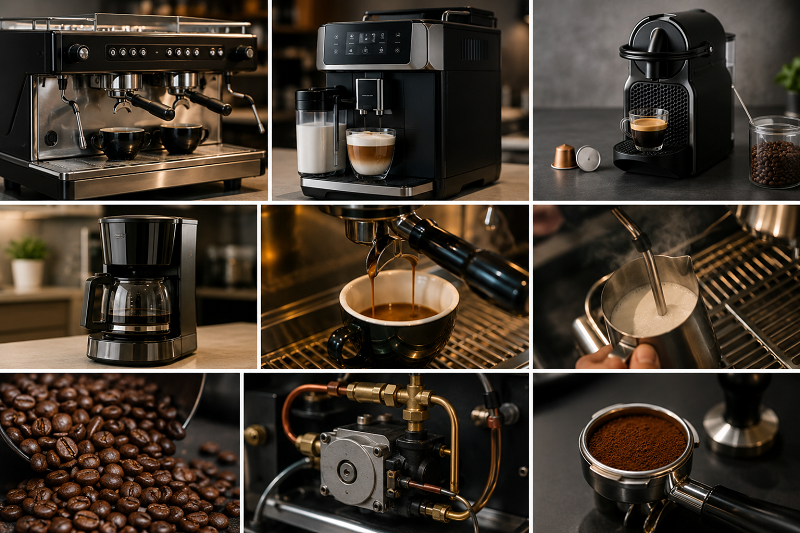
Coffee machines can be classified by brewing method, automation level, capacity and intended operating environment. The main categories include espresso, semi-automatic, bean-to-cup, capsule, drip and cold brew coffee machines. Espresso systems suit concentrated and milk-based beverages; drip systems support batch service; capsule machines prioritize speed and consistency; bean-to-cup systems automate grinding and brewing; and cold brew machines support chilled beverage programs. For business buyers, the right choice depends on beverage menu, daily and peak-hour volume, staff skills, infrastructure, maintenance requirements and total cost of ownership.
This guide explains how each coffee machine type works, where it is commonly used, what to compare before purchasing and how to choose a system for a cafe, office, hotel, restaurant, catering operation or distribution channel.
| User or business need | Recommended starting point | Main reason |
|---|---|---|
| Espresso, latte and cappuccino menu | Espresso or semi-automatic machine | Supports concentrated extraction and milk drinks |
| Freshly ground coffee with simple operation | Bean-to-cup machine | Automates grinding, dosing and brewing |
| Fast single-serve coffee | Capsule coffee machine | Uses pre-portioned coffee with limited preparation |
| Large-volume black coffee | Drip or filter coffee machine | Supports batch brewing and shared service |
| Cold coffee menu | Cold brew coffee machine | Supports chilled coffee production |
| Professional barista control | Semi-automatic espresso machine | Gives the operator more control over preparation |
| Office or hotel self-service | Capsule or bean-to-cup machine | Reduces training and preparation requirements |
No coffee machine type is universally best. The right system is the one that matches the menu, volume, staff workflow, infrastructure, maintenance plan and expected cost of operation.
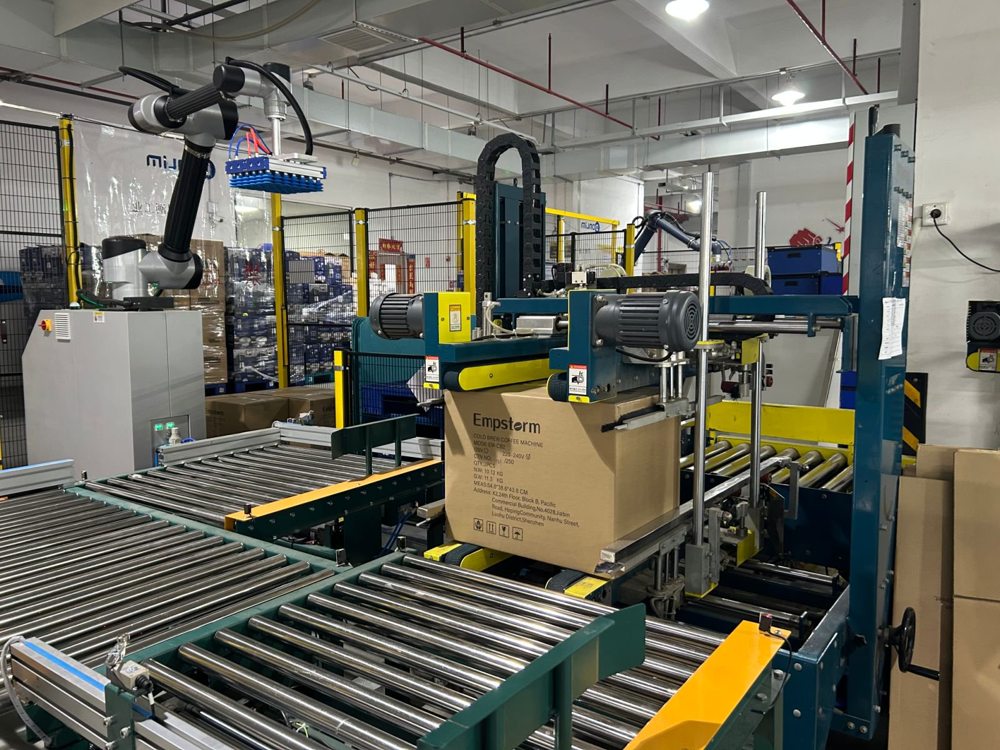
Coffee brewing is a complex chemical process. Every machine type manipulates variables differently. Specifically, they control temperature, pressure, and time. These factors determine the flavor profile of your cup. Consequently, the industry offers a vast array of specialized equipment. At Empstorm, we prioritize engineering precision. We understand that one size does not fit all. Therefore, we design machines for various extraction goals.
The Specialty Coffee Association (SCA) defines strict standards for brewing. For example, water temperature should stay between 195°F and 205°F. Achieving this requires high-quality heating elements. Furthermore, the pump must provide consistent flow. Many cheap machines fail these basic tests. This guide explains why technical specs matter for your daily brew.
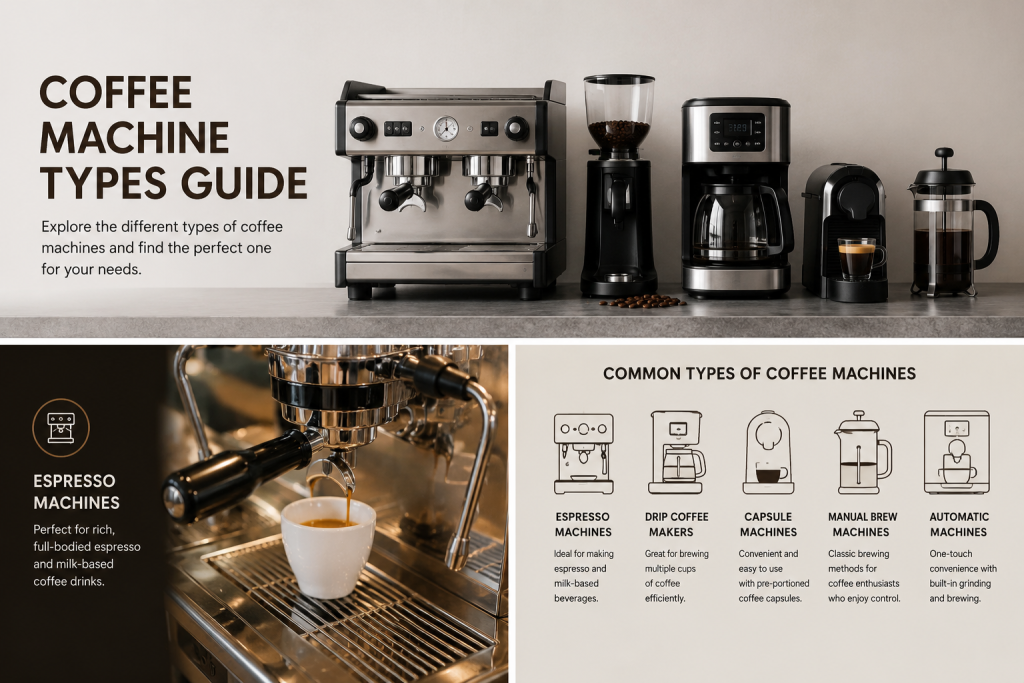
The phrase “coffee machine type” can refer to several different classification systems. A useful comparison should separate brewing method from automation level and business application. This prevents buyers from comparing machines that solve completely different operational problems.
The brewing method describes how water interacts with coffee.
Automation describes how much of the preparation process is controlled by the machine.
The same machine may perform differently depending on where it is installed. A hotel room, office, specialty cafe and high-volume restaurant have different requirements for output, training, cleaning, noise, water capacity and service access.
For commercial buyers, the most useful classification considers:
| Machine type | Brewing method | Automation | Suitable applications | Operator skill | Main trade-off |
|---|---|---|---|---|---|
| Espresso machine | Pressure extraction | Manual to automatic | Cafes, restaurants and hotels | Medium to high | More training and maintenance |
| Semi-automatic espresso machine | Pressure extraction | Semi-automatic | Barista-led cafes and prosumer users | Medium to high | More control but less automation |
| Bean-to-cup machine | Automated grinding and brewing | Fully automatic | Offices, hotels and self-service | Low to medium | More internal components require service planning |
| Capsule coffee machine | Pre-portioned capsule extraction | Automatic | Hotels, offices and guest rooms | Low | Capsule cost and waste management |
| Drip coffee machine | Gravity filtration | Automatic | Offices, hotels and catering | Low | Not designed for true espresso |
| Cold brew machine | Low-temperature extraction | Manual to automatic | Cafes and beverage brands | Low to medium | Requires different storage and cleaning planning |
An espresso coffee machine forces heated water through a compact bed of finely ground coffee to produce a concentrated drink with a distinctive body and crema. Espresso is also the base for drinks such as Americanos, cappuccinos, lattes and macchiatos, so the machine often becomes the central piece of equipment in a cafe or hospitality beverage program.
The term “espresso machine” describes the brewing system, not one single operating format. A commercial espresso setup may be manual, semi-automatic, automatic or fully automatic. The most suitable format depends on how much control the operator needs, how quickly drinks must be served and how much training the business can support.
An espresso machine combines a heating system, a hydraulic circuit and a brewing group. The heating system prepares water for brewing and, on machines with a steam function, produces steam for milk. The hydraulic circuit moves water through the pump, valves and brew path. The brewing group distributes water across the coffee puck before the drink reaches the cup through the portafilter or internal brew unit.
The machine does not determine the final cup by itself. Coffee freshness, grind size, dose, distribution, tamping, water quality, temperature, flow and extraction time all affect the result. This is why an espresso machine should be selected together with a suitable grinder, recipe and operating procedure.
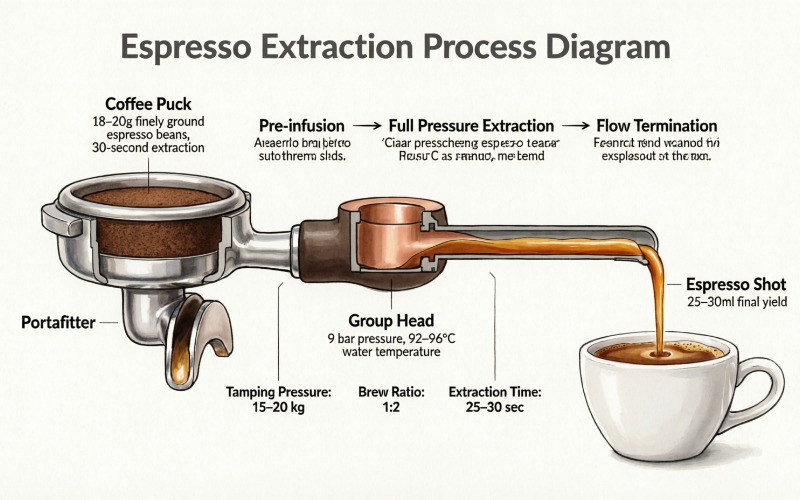
The brewing cycle normally follows this sequence:
Consistent espresso depends on the relationship between these components. A high pump number cannot compensate for poor grind adjustment, unstable temperature, an unsuitable basket or an inconsistent workflow. Buyers should therefore compare the whole extraction system instead of selecting a machine from one headline specification.
Espresso systems are a natural fit for cafes and coffee shops because they support a broad menu and allow the operator to adjust recipes for different beans. They are also used in restaurants, hotels, coffee carts, offices with a dedicated beverage operator and specialty retail environments.
For a restaurant, the key question is usually whether espresso drinks are a core part of the menu or an occasional add-on. A compact single-group setup may be easier to install and maintain for light service, while a higher-capacity configuration may be appropriate when several espresso and milk orders arrive together. The correct choice depends on verified workload, not on the word “commercial” in a product title.
| Specification | Why it matters in operation |
|---|---|
| Group configuration | Affects how many drinks can be prepared together and how operators share the machine. |
| Heating system | Influences warm-up time, temperature behavior and the ability to brew and steam during busy periods. |
| Temperature control | Helps the operator repeat a recipe when the machine is used continuously. |
| Pump and pressure regulation | Should be assessed with flow behavior and the intended recipe, not maximum pressure alone. |
| Steam system | Determines how efficiently the operator can texture milk and recover between drinks. |
| Portafilter and basket size | Affects dose range, workflow and compatibility with accessories. |
| Water supply | A tank can simplify installation; direct connection may suit fixed commercial locations. |
| Service access | Makes cleaning, inspection and replacement of wear parts easier. |
| Advantages | Limitations |
|---|---|
| Supports espresso, Americano and milk-based menus | Requires recipe control and operator training |
| Allows adjustment for different coffee beans and drinks | Grinder quality and calibration strongly affect results |
| Can support a premium or specialty beverage program | Brew groups, steam systems and milk tools need regular cleaning |
| Offers a visible preparation experience for customers | Busy periods require a planned workflow and enough recovery capacity |
The practical decision is not whether an espresso machine is “better” than every other type. It is whether the business needs espresso extraction, milk steaming and recipe flexibility enough to justify the training and maintenance involved. For a direct brewing comparison, see Espresso Machine vs Drip Coffee Maker.
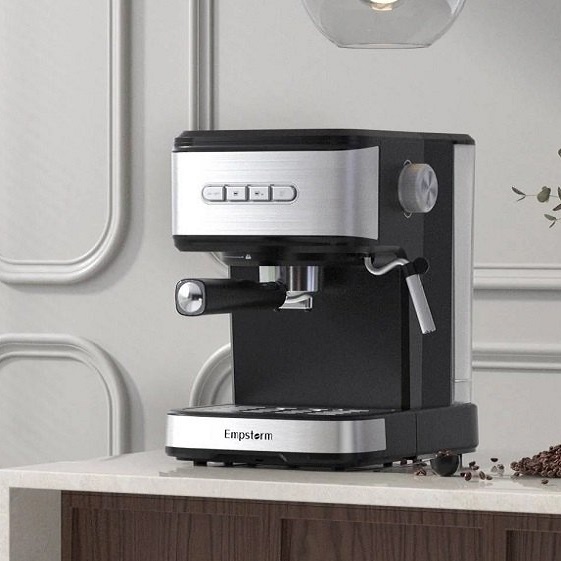
Semi-automatic is an operating and control category within espresso machines. It is not a completely separate brewing method. A semi-automatic machine still uses espresso extraction, but the operator normally grinds the coffee, doses it into the portafilter, prepares the puck and starts or stops the brew cycle.
This distinction is important for buyers comparing machine types. A semi-automatic coffee machine can be small enough for a home kitchen or robust enough for a light commercial counter. The word “semi-automatic” tells you more about the workflow than about the machine’s capacity, durability or suitability for a specific business.
The operator prepares the coffee separately from the machine. After grinding, the dose is distributed and tamped in the portafilter. The portafilter is locked into the brew group, and the operator activates the pump or brew switch. Depending on the model, the machine may stop the shot automatically at a programmed volume, or the operator may stop it manually.
This workflow leaves several variables in human hands: grind size, dose, distribution, tamping, pre-infusion time, shot length and milk texture. That flexibility is valuable when a cafe changes beans or recipes, but it also means that two operators can produce different results if the process is not documented.
Semi-automatic espresso machines are a good starting point for cafes, restaurants and small beverage businesses that want espresso and milk drinks with direct operator control. They can also suit training environments, experienced home users and distributors whose target customers value visible barista preparation.
They may be less suitable when the machine must be operated by many untrained users, when staff turnover is high or when the business needs the same drink with minimal manual preparation. In those cases, a bean-to-cup or capsule workflow may reduce preparation steps, although it will not remove cleaning, replenishment or service responsibilities.
Before choosing semi-automatic equipment, ask three practical questions:
The grinder is part of the semi-automatic system even when it is purchased separately. Grind size affects how quickly water passes through the coffee. Dose and basket selection affect the depth of the coffee bed. Distribution and tamping influence whether water finds an easier path through one section of the puck. Shot time and beverage weight then help the operator judge the recipe.
For a commercial installation, the buyer should define a simple operating standard. It may specify the coffee dose, target beverage weight, adjustment process, cleaning frequency and who is responsible for calibration. A machine with advanced temperature or pressure controls cannot create a repeatable drink when the basic preparation process is undefined.
| Consideration | Semi-automatic | Fully automatic or bean-to-cup |
|---|---|---|
| Coffee preparation | Operator grinds, doses and prepares the coffee | Grinding and brewing are integrated into a programmed workflow |
| Control | High control over recipe and extraction | More emphasis on repeatability and convenience |
| Training | Operators need preparation and cleaning skills | Training is simpler, but settings and cleaning still matter |
| Menu flexibility | Often strong for espresso and milk recipes | Depends on beverage software and milk system |
| Peak workflow | Can be fast with a trained barista | Can reduce manual steps in self-service environments |
| Maintenance | Group, portafilter, steam and grinder maintenance | Grinder, brew unit, milk circuit, waste and software maintenance |
Compare the heating system, temperature behavior, steam recovery, portafilter format, water supply, counter depth, electrical requirements and access to replacement parts. For distributors, also confirm the manual, warranty terms, service procedure, packaging, spare-parts availability and market-specific electrical configuration.
The right question is not “Is semi-automatic better than fully automatic?” It is “Does this operating team have the skills and workflow needed to benefit from manual control?” See Semi-Automatic vs Fully Automatic Espresso Machines for a more detailed comparison.
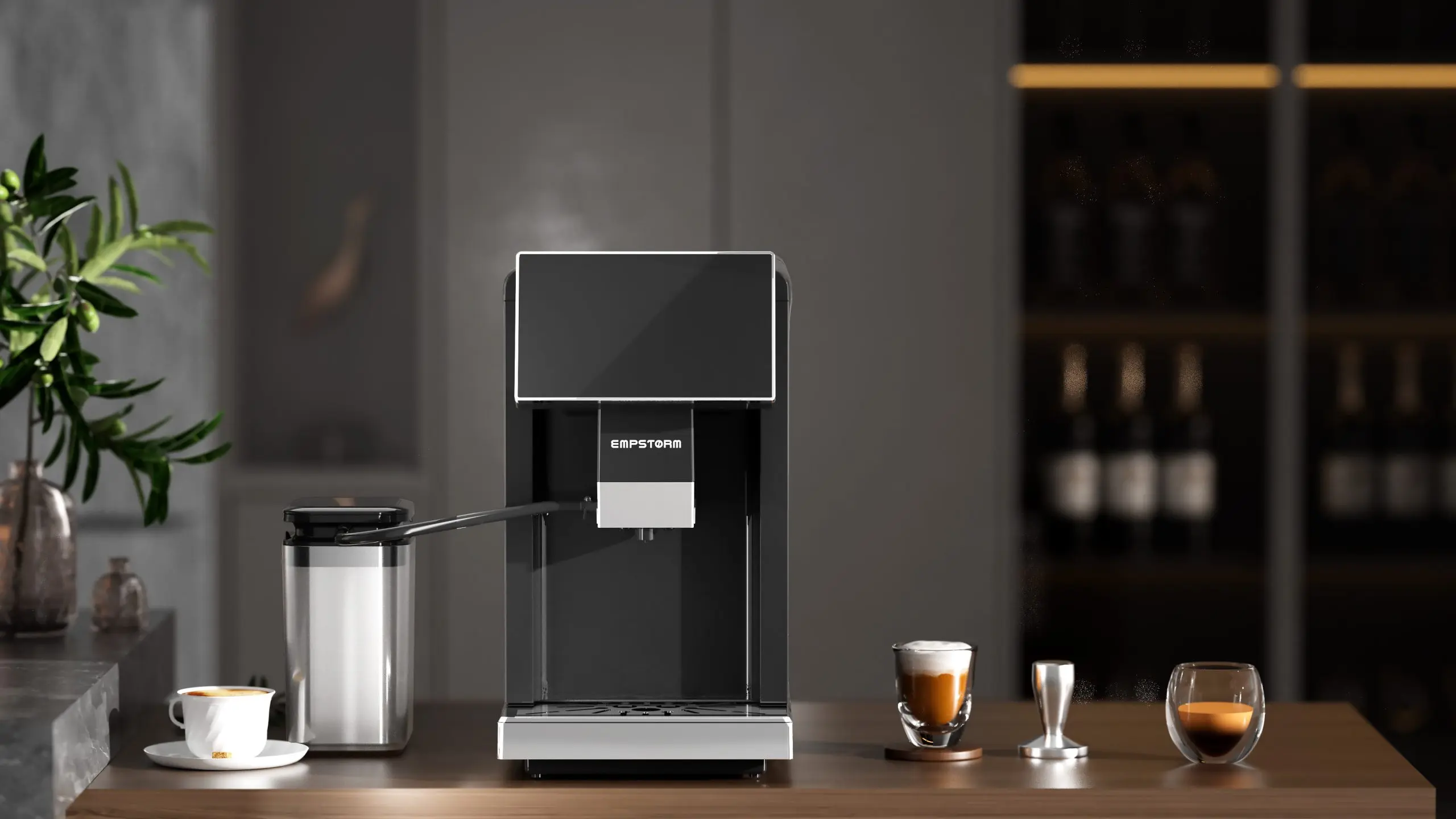
Bean-to-cup machines combine whole-bean grinding and beverage preparation in one system. A typical cycle may include grinding, dosing, brewing, dispensing and waste handling. Some models also automate milk preparation, recipe selection and cleaning prompts.
The main value is workflow consistency. A user can select a programmed beverage without separately weighing coffee, tamping a portafilter or managing a manual brew switch. This makes bean-to-cup equipment attractive for offices, hotel lounges, self-service areas and retail locations where not every operator has barista training.
The user selects a recipe through a button, display or connected interface. The grinder adjusts to a programmed setting, doses the beans and sends the grounds to the internal brew unit. The machine controls water delivery and dispenses the beverage. Used grounds and excess water are collected in internal containers.
Automation improves repeatability, but it creates a different maintenance profile. The grinder can accumulate coffee residue, the brew unit needs cleaning, the waste container must be emptied and a milk circuit requires careful sanitation. A machine should never be described as maintenance-free simply because the preparation cycle is automatic.
Bean-to-cup systems are often considered for:
For a hotel or office project, capacity should be assessed by peak usage and refill frequency. A larger hopper or water tank may reduce staff intervention, but it may also increase the space required and the amount of cleaning when the machine is used less often.
Bean-to-cup coffee machines reduce the number of manual preparation steps and can offer a consistent menu to different users. They are useful when the business wants a simple interface, predictable portioning and less dependence on one highly trained barista.
The trade-off is system complexity. The buyer must understand the grinder adjustment range, brew-unit cleaning, milk hygiene, waste handling, descaling, software settings and service access. A fault in an integrated system can affect several preparation steps at once, so local technical support and spare parts deserve attention during sourcing.
| Decision factor | Bean-to-cup | Capsule or pod |
|---|---|---|
| Coffee input | Whole beans | Pre-portioned capsules or pods |
| Preparation steps | Grinding and brewing are automated | Capsule insertion and programmed brewing |
| Recipe control | Depends on grinder, brew settings and software | Depends on capsule format and machine settings |
| Waste | Grounds and packaging from beans | Used capsules, pods and packaging |
| Cleaning | Grinder, brew unit, milk system and waste container | Capsule chamber, brew path, tank and drip tray |
| Supply planning | Beans and compatible consumables | Reliable capsule supply and format compatibility |
The choice depends on the menu, labor model, cost-per-serving calculation, waste process and supply chain. Read Capsule vs Bean-to-Cup Machine: Commercial ROI Guide before making a volume or cost claim.and service.
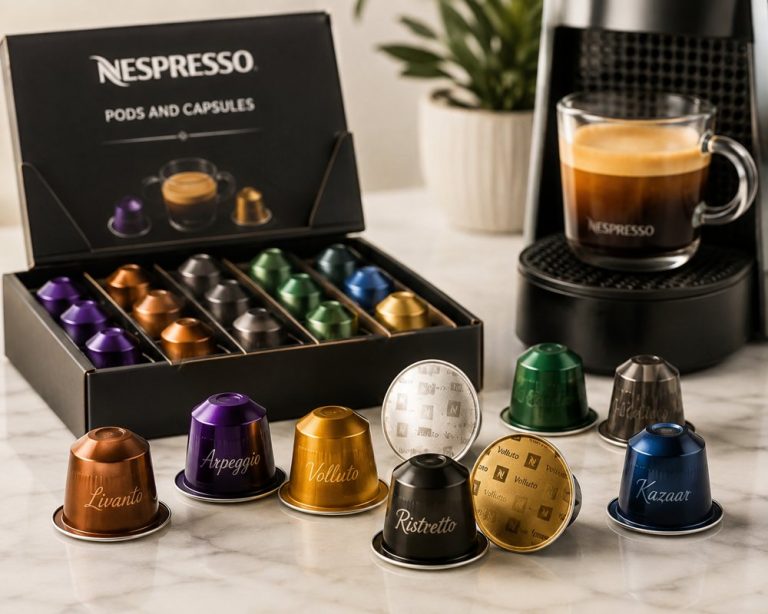
Capsule and pod machines use a pre-portioned serving of coffee. The machine punctures or opens the capsule, moves heated water through the coffee and sends the drink to the cup. The user does not need to grind, weigh or tamp the coffee, which makes the format easy to teach and easy to standardize across multiple rooms or locations.
The important purchasing question is compatibility. “Capsule machine” does not describe one universal capsule size. A buyer should confirm the supported capsule or pod system, local availability, compatible beverage sizes, used-capsule storage and whether the target market has a stable supply of consumables.
Capsule systems are commonly considered for hotel rooms, offices, guest lounges, salons, waiting rooms, meeting rooms and small service counters. They work particularly well when the user needs one serving at a time and the operator cannot depend on a trained barista.
They are less suitable when the business needs a highly customized specialty menu, very high continuous volume or precise control over every extraction variable. The machine may simplify preparation, but the operating model still needs a plan for capsule replenishment, used-capsule collection, water filling and descaling.
The purchase price is only one part of the cost. Calculate the capsule cost per drink, shipping and storage, cleaning supplies, replacement parts, water filters and the labor required to refill and remove waste. For a hotel, also consider how housekeeping staff will check the water tank, capsule stock and drip tray in each room.
Distributors should confirm whether the machine can be sold with locally available capsules or whether the program depends on an imported format. A product that is easy to demonstrate but difficult to supply may create customer-service problems after installation.
Traditional espresso equipment provides more control over coffee selection, grind, dose and milk preparation. Capsule equipment generally provides a simpler and more consistent single-serve workflow. Neither system is automatically the best choice; the answer depends on beverage expectations, staff capability and consumable economics.
Sustainability claims need to reflect the actual capsule material, local collection system and transport arrangement. Buyers should review:
Avoid absolute claims such as “capsules are environmentally friendly” or “traditional systems are always more sustainable” unless they are supported by a defined lifecycle study. See Capsule Coffee Maker vs Traditional Coffee Machine for a broader comparison.
Nespresso and Keurig use fundamentally different extraction technologies. Nespresso Original machines use a high-pressure pump system. This pump forces water through the pod at nearly 19 bars. Consequently, it creates a dense crema similar to traditional espresso. In contrast, Nespresso Vertuo machines utilize Centrifusion™ technology. The machine spins the capsule at 7,000 rotations per minute. This centrifugal force blends ground coffee with water perfectly. It produces a thick, foamy crema for larger cup sizes.
Keurig machines operate differently. They function like a miniaturized automatic drip brewer. The machine pierces the K-Cup lid with a needle. Then, it sprays hot water over the coffee grounds. The coffee filters through a paper layer inside the pod. Therefore, Keurig produces a clean, drip-style cup of coffee. It lacks the intense pressure needed for true espresso. We compare these options in our Capsule vs Bean-to-Cup Machine guide.
Drip and filter coffee machines are designed to brew a larger amount of coffee by passing heated water through ground coffee and a paper, reusable or integrated filter. The brewed coffee then flows into a carafe, thermal server or holding vessel.
This is a batch-brewing workflow rather than espresso extraction. It is a practical choice when the service needs multiple cups of black coffee, simple operation and predictable preparation without a barista managing individual shots.
The operator fills the water reservoir or uses a plumbed supply, adds the required amount of ground coffee and starts the cycle. The heating system delivers water to a distribution area, often called a showerhead, which spreads water across the coffee bed. The brew then drains into the serving vessel.
Taste consistency depends on water distribution, contact time, coffee dose, grind size, water temperature and the condition of the filter and spray components. A larger capacity does not automatically mean better coffee. It must match the batch size, holding time and expected serving pattern.
Drip systems are commonly used in offices, hotels, breakfast areas, restaurants, meeting rooms, catering operations and self-service stations. They are particularly useful when users want several cups within a defined service window rather than individually prepared espresso drinks.
For catering, portability, power supply, water access and serving containers may be more important than a large advertised reservoir. For an office, the buyer should consider how often a batch will be brewed and whether the machine can keep coffee at an acceptable quality during the expected holding period.
Compare usable batch volume, brew time, carafe or thermal-server format, refill frequency and cleaning access. Ask whether the stated capacity refers to the water tank, the brewed output or a nominal cup count. Cup sizes vary, so a distributor should explain the measurement clearly in product documentation.
Holding coffee for too long can reduce flavor quality even when the machine continues to keep it warm. A commercial workflow should define batch size, serving time, refill procedure and end-of-day cleaning rather than relying only on a keep-warm function.
| Requirement | Drip or filter machine | Espresso machine |
|---|---|---|
| Main output | Batch brewed coffee | Concentrated espresso and milk drinks |
| Typical workflow | Prepare a batch for several servings | Prepare individual drinks or small groups of drinks |
| Operator skill | Usually lower for basic service | Higher when recipes and milk drinks are involved |
| Menu flexibility | Strong for black coffee and simple service | Strong for espresso, Americano and milk-based menus |
| Peak-hour planning | Batch timing and holding quality | Group capacity, steam recovery and barista workflow |
See Commercial Batch Brewers vs Residential Drip Systems and Espresso Machine vs Drip Coffee Maker for related comparisons.
Your choice of filter significantly changes the coffee’s texture. Paper filters trap most coffee oils and fine particles. Consequently, they produce a very clean and crisp cup. Permanent gold-tone or mesh filters allow more oils to pass through. This increases the body and mouthfeel of the coffee. However, it also increases the sediment at the bottom of the cup. For those who enjoy a heavier body, a French Press might be better.
Expert Note: Rinse your paper filters with hot water before brewing. This removes the “papery” taste and pre-heats your carafe for better temperature retention.
Most drip machines come with either glass or thermal carafes. Glass carafes sit on a heated plate. This often “cooks” the coffee, making it bitter over time. Thermal carafes use vacuum insulation to maintain heat without electricity. Therefore, thermal carafes preserve the flavor profile much longer. At Empstorm, we always recommend thermal carafes for long-term freshness.
Cold brew equipment supports coffee prepared with cool or room-temperature water over a controlled contact period. This differs from espresso and drip brewing, where heated water is normally used to extract coffee during a relatively short brew cycle.
The phrase “cold brew machine” can describe different systems. Some equipment supports a traditional batch process, while other systems use controlled circulation, pressure or another accelerated method. The operating method, recipe, temperature and contact time must be confirmed for the specific model before making a performance claim.
Cold brew programs usually require a different relationship between grind size, coffee-to-water ratio, temperature and extraction time. The finished beverage may be served directly, diluted, mixed into another drink or used as an ingredient in a larger beverage program.
That means the machine is only one part of the process. The operator also needs a recipe, storage container, refrigeration plan, sanitation procedure and serving workflow. A system that produces a concentrated base may require different handling from a system that produces a ready-to-serve drink.
Cold brew equipment can be considered for cafes, restaurants, beverage brands, catering operations, retail counters and seasonal drink programs. It may be especially useful when the business wants to prepare a repeatable cold coffee base rather than make each drink from an espresso shot.
Before purchasing, estimate demand by day and by season. Low demand can make storage and cleaning inefficient, while high demand may require multiple vessels, refrigeration capacity, transfer equipment and a documented sanitation process.
Evaluate more than the nominal batch size. Review:
Cold brew is a ready-to-consume product category, so cleaning and storage procedures should be treated as part of the equipment specification. Any shelf-life or food-safety statement must be based on the operator’s process, local rules and documented validation.
For a distributor or beverage brand, the evaluation also includes packaging, repeatable recipes, production documentation, spare parts and after-sales support. OEM and ODM discussions should define what can actually be customized, such as appearance, controls, packaging or workflow, rather than using customization as an unsupported general claim.
Relevant internal paths include Cold Brew Coffee Machine, Restaurant Coffee Maker, Catering Coffee Machines and Contact Empstorm.
French press, moka pot and pour-over brewing are useful reference points when explaining coffee preparation, but they are different from the commercial machine systems that form the main focus of this guide.
French press brewing steeps coarse coffee grounds in water before the beverage is separated with a mesh plunger. It is simple and does not require an espresso pump, but the result depends on steeping time, grind size, water temperature and filtration. It is generally more relevant to home use, small serving situations and coffee education than to a high-volume commercial workflow.
A moka pot uses pressure generated by heated water and steam to move water through ground coffee. It produces a strong coffee concentrate, but it is not the same as espresso extracted by a pump-driven commercial espresso machine. The distinction matters when a buyer is comparing beverage style, pressure behavior, speed and commercial repeatability.
Pour-over brewing gives the operator direct control over water distribution, pouring pattern and contact time. It can be valuable for specialty coffee and demonstration service, but it normally requires more attention per cup than a batch brewer, capsule system or automatic machine.
These methods may be useful for home users and specialty coffee enthusiasts. They should remain a short comparison in a commercial coffee machine guide rather than becoming separate product categories unless the website plans to serve a genuine manual-brewing audience.
| Feature | Espresso | Drip Maker | Pod/Capsule | Manual (Press) |
|---|---|---|---|---|
| Strength | High (Concentrate) | Low (Filter) | Medium | Medium-High |
| Prep Time | 5-10 Minutes | 5 Minutes | 1 Minute | 5-8 Minutes |
| Milk Frothing | Integrated Steam | External Only | Optional | None |
| Long-term Cost | Low (Whole Bean) | Low (Bulk) | High (Pods) | Lowest |
Expert Note: If you drink mostly lattes, do not buy a drip maker. You need the 9 Bar pressure of an espresso machine. This pressure creates the “body” to balance out the milk.
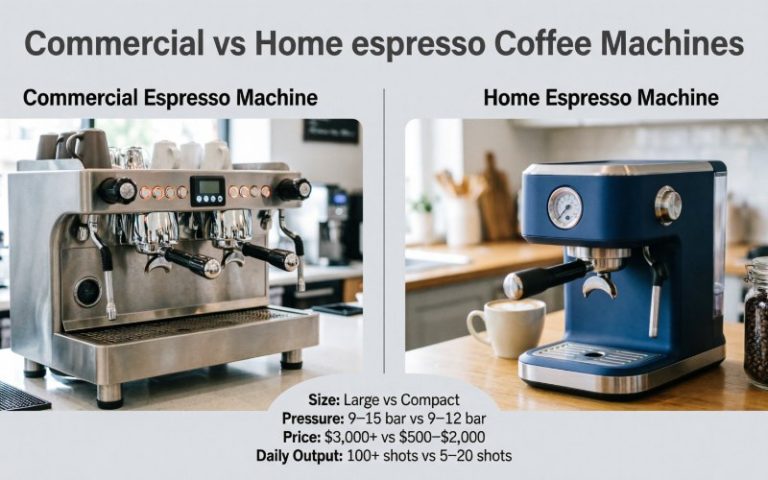
Commercial and home machines may share the same basic brewing principles, but they operate under different expectations. A commercial buyer is paying for a workable system: equipment, staff workflow, installation, cleaning, support and uptime. A home buyer may prioritize footprint, convenience, design and occasional use.
Start with two numbers: expected daily volume and peak-hour volume. A machine can produce enough drinks across a full day and still fail during a 30-minute rush if it cannot recover, refill or serve drinks quickly enough.
Also clarify whether the manufacturer’s capacity is a recommended operating range, a laboratory maximum or a simple water-tank measurement. Do not present a nominal cup count as a guaranteed commercial output without the test conditions.
Semi-automatic equipment can produce a highly customized menu when trained staff control the grinder, dose and extraction. Capsule and fully automatic equipment can reduce preparation steps where many users have different skill levels. In both cases, someone still needs responsibility for cleaning, refilling, troubleshooting and consumable control.
Compare thermoblocks, boilers, heat exchangers and dual-boiler systems in relation to the actual menu. A business that serves mostly black coffee may have different requirements from one that prepares consecutive espresso and milk drinks. Pump pressure should be considered with flow, temperature and recipe behavior rather than as a standalone marketing number.
Confirm voltage, frequency, plug type, available circuit capacity, water source, drainage, filtration, counter depth and ventilation. A machine that fits the menu but cannot be installed safely is not a suitable commercial solution.
Before ordering, request the cleaning schedule, descaling instructions, warranty terms, spare-parts list, service contacts and troubleshooting procedure. For distributors, local service capacity and spare-parts availability can have a larger effect on customer satisfaction than a small difference in purchase price.
| Cost area | Questions to ask |
|---|---|
| Equipment | What is included, and what must be purchased separately? |
| Coffee or capsules | What is the cost per serving and how stable is the supply? |
| Labor | Who prepares, cleans, refills and calibrates the machine? |
| Consumables | Are filters, cleaning tablets, seals or milk-system parts required? |
| Service | What are the warranty process, response time and repair options? |
| Downtime | What happens if the machine is unavailable during peak service? |
For a broader comparison, read Commercial vs Home Coffee Machines: Key Differences.
The primary difference is pressure versus gravity. Espresso machines force water through a 58mm portafilter at high speed. Consequently, they emulsify oils into a thick crema. Drip brewers allow water to seep through grounds slowly. This results in a cleaner, more tea-like consistency. Furthermore, drip machines are better for serving large groups. We provide a detailed cost-per-cup analysis Espresso Machine vs Drip Coffee Maker.
This debate centers on the balance of craft and consistency. Manual brewers like the French Press require your full attention. You must manage the steep time and water temperature yourself. In contrast, automatic machines use programmed logic for every cycle. They ensure the same flavor profile every morning. Most professionals prefer manual control for delicate light roasts. However, busy offices depend on the reliability of automation. Read our full verdict: Manual vs Automatic Coffee Machine. Similarly, compare Manual vs Automatic Espresso Machines: Which Is Better?.
These two categories fight for the “convenience” crown. Capsule machines offer zero-mess operation and standard results. They are perfect for small spaces and hotel rooms. Alternatively, bean-to-cup machines grind whole beans for every shot. This preserves the volatile aromatics that capsules often lose. Consequently, bean-to-cup machines produce a much more vibrant flavor. We explore the 2026 market trends in Capsule vs Bean-to-Cup Machine.
| Business type | Recommended starting point | Main decision factors |
|---|---|---|
| Specialty cafe | Espresso or semi-automatic system | Beverage menu, milk drinks and peak-hour workflow |
| Office | Capsule, bean-to-cup or drip system | User count, ease of use, cleaning and refill frequency |
| Hotel room | Capsule or compact drip machine | Guest experience, footprint and housekeeping workflow |
| Hotel lounge | Bean-to-cup or espresso system | Beverage variety, service volume and presentation |
| Restaurant | Espresso, drip or combined setup | Menu integration and service pattern |
| Catering | Portable espresso, drip or cold brew setup | Transport, power and water conditions |
| Distributor | Multiple categories based on target market | Product positioning, MOQ, support and sell-through |
Explore our coffee machine applications.
Decide whether the business mainly needs espresso drinks, milk-based beverages, black coffee, single-serve beverages or cold brew. The menu determines the required brewing method and supporting equipment.
Record expected daily servings and the number of beverages required during the busiest service period. Peak-hour demand is essential for choosing capacity, recovery and workflow.
Choose a level of automation that matches the people who will operate, clean and troubleshoot the machine.
Confirm local electrical requirements, water source, drainage, installation space and ventilation before ordering.
Include machine cost, coffee or capsule cost, labor, cleaning products, water filters, spare parts, service, downtime and expected operating life.
Before purchase, request the product manual, technical specifications, warranty terms, service process, spare-parts information and applicable documentation for the target market.
Maximum advertised pump pressure is not the same as the pressure used during extraction. Compare pressure regulation, flow behavior, system design and the intended coffee recipe rather than relying on the highest number on the specification sheet.
Compare thermoblock, boiler, heat-exchanger and dual-boiler systems according to the required workflow. PID and other control systems should be evaluated using actual product specifications and stated test conditions.
For bean-to-cup and integrated-grinder systems, review grinder material, adjustment range, dosing consistency, hopper capacity and cleaning access.
Water tank size, direct connection, filtration, drainage and water hardness can affect reliability and maintenance. Local water conditions should be considered before final selection.
For milk-based menus, compare steam recovery, wand design, automatic milk cleaning, refrigerated milk options and daily sanitation requirements.
Electrical and Installation Requirements
Every product page should state or link to verified voltage, frequency, rated power, plug type, dimensions, net weight and installation conditions. These values must be model-specific. A specification from one machine must not be generalized to an entire category.
Cleaning access is part of machine performance. Review removable components, backflush or brew-path procedures, descaling instructions, waste handling, filter replacement and access to seals, valves, pumps and heating parts. For B2B buyers, service documentation and spare parts should be included in the sales process.
Continue exploring the Coffee Machine Types topic with these related guides:
For the wider resource center, visit the Coffee Maker Types, Coffee Machine Knowledge Hub.
This guide is designed to explain coffee machine selection in practical terms for buyers, distributors and equipment operators. Recommendations should be evaluated according to brewing method, expected usage, beverage menu, operator workflow, installation requirements, maintenance access and total cost of ownership.
Product specifications should be confirmed against the relevant product documentation and stated operating conditions. Where Empstorm publishes first-hand test data, the test model, date, equipment, conditions and limitations should be identified.
Tell us about your business, target market and operating requirements. The Empstorm team can help you compare suitable coffee machine types and product options.
To receive a more relevant recommendation, include:
After comparing machine types, explore Empstorm’s coffee machine product range and commercial coffee machine applications.
Explore Coffee Machine Categories:
Understanding coffee machine types involves many technical questions. Consequently, we have compiled this FAQ to help your decision. These answers focus on durability, performance, and flavor output. Use this section to quickly troubleshoot your buying process.