Join us in shaping the future of espresso innovation
Share your product ideas and market needs
Participate in prototype testing and optimization
Co-develop products with stronger market competitiveness

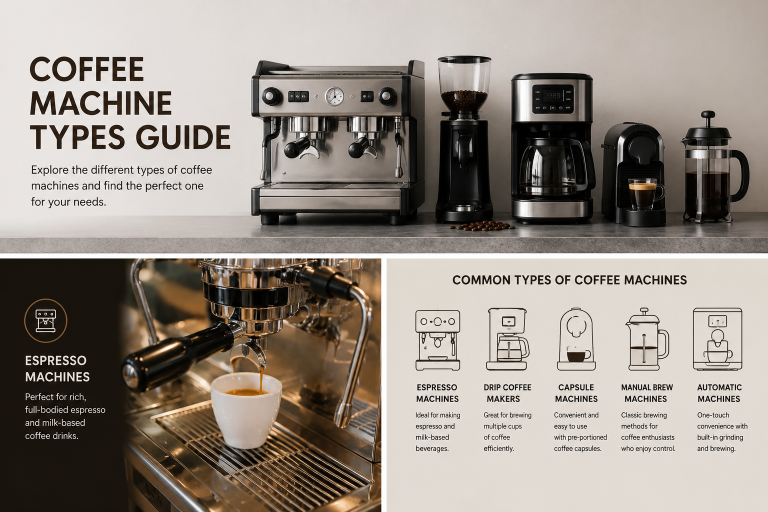
If you’re new to espresso machines, start with our Ultimate Guide to Coffee Machine Types.
This article is part of our Coffee Maker Types guide. For a complete overview, visit our Coffee Machine Knowledge series.
While both commercial and home coffee machines are designed to brew high-quality coffee, they cater to very different user needs. Commercial machines prioritize speed, capacity, and consistency, while home machines focus on convenience and affordability.
Choosing the right coffee machine can be a daunting task, especially when considering the fundamental differences between commercial and home models. Whether you’re a café owner, an equipment agent, or a high-end home consumer, understanding these distinctions is essential for making an informed decision. This article delves into the technical specifications, build quality, performance factors, and cost considerations of both types of machines to help guide your purchase.
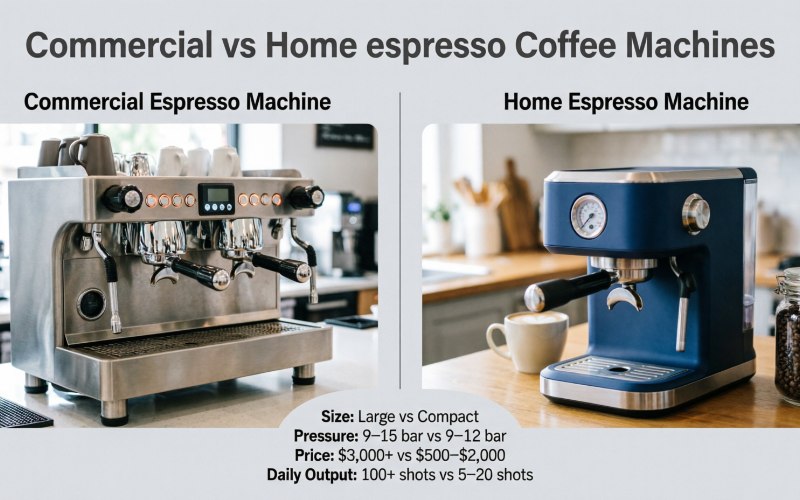
The primary differences between commercial and home coffee machines revolve around performance, capacity, build quality, and the intended environment in which they operate. Let’s break down these distinctions further.
The pressure at which a coffee machine operates plays a significant role in determining the quality of the espresso shot. Commercial espresso machines are engineered for high performance and reliability. They typically operate at 9-15 bars of pressure, which allows for consistent and efficient extraction of coffee flavors.
Home espresso machines, on the other hand, usually run at 9 bars of pressure, which is sufficient for everyday coffee brewing. However, some lower-end models may struggle to maintain this pressure, especially during extended use. This is why commercial machines are often preferred for high-volume settings, as they can maintain consistent pressure across multiple shots without significant fluctuations.
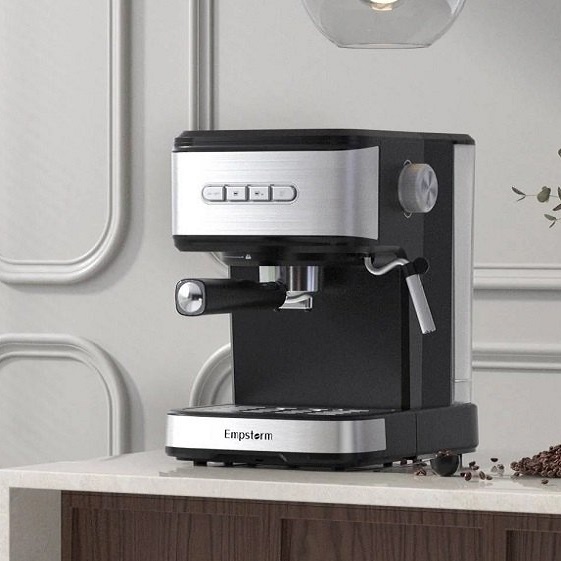
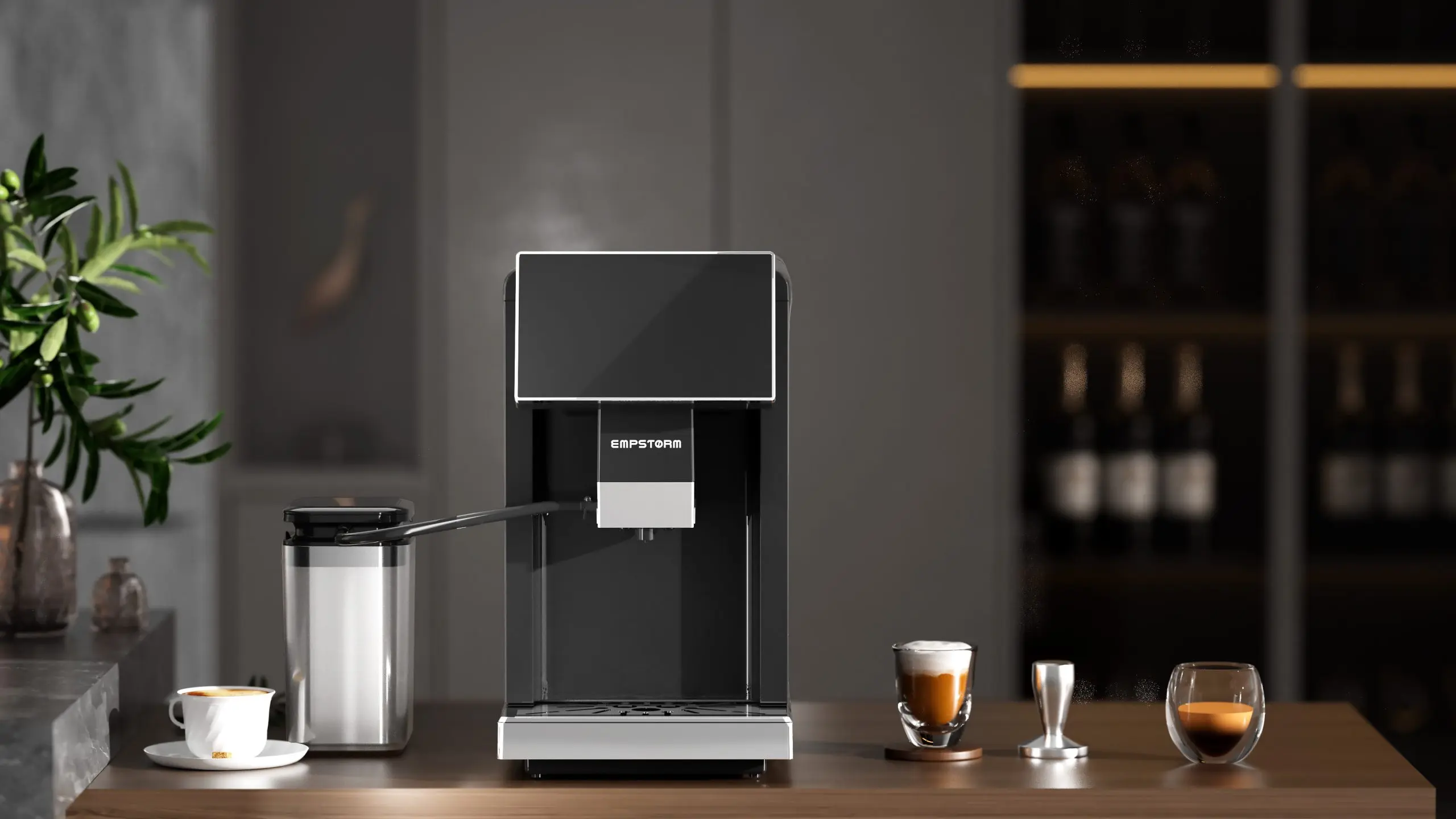
Empstorm’s espresso coffee machine is engineered to deliver up to 20 bars of high-pressure performance. This higher pressure ensures deeper flavor extraction, richer crema, and more consistent espresso quality, bringing café-level results into your home.
Commercial coffee machines are built to handle large volumes of coffee. They often come with expansive water reservoirs, typically ranging from 3 to 10 liters, and can brew multiple cups at once. These machines are ideal for bustling cafés and restaurants where the demand for coffee is high.
In contrast, home coffee machines are designed for smaller-scale use. Their water reservoirs usually hold less than 2 liters, which is adequate for personal or family use. While some high-end home machines offer larger reservoirs, they are still designed with limited volume in mind compared to commercial units.
Thermal stability is a critical factor in espresso brewing. Commercial coffee machines utilize advanced thermal management systems, often incorporating PID (Proportional-Integral-Derivative) controllers. This technology ensures precise control over the brewing temperature, which is essential for extracting the full flavor profile of the coffee.
Home coffee machines, while generally effective for everyday brewing, often lack the sophisticated thermal control found in commercial machines. Many home machines rely on basic thermostats or thermoblocks, which can lead to temperature fluctuations and inconsistent results over time. This is not a problem for commercial machines, which are engineered for stable, high-precision performance even during peak hours.
Commercial espresso machines are built to last. Constructed from heavy-duty materials like stainless steel, they are designed for continuous use in high-traffic environments. The internal components are robust and capable of withstanding the wear and tear that comes with producing dozens, or even hundreds, of cups per day.
On the other hand, home coffee machines prioritize portability, ease of use, and compactness. While they may still feature metal components, they are often made with lighter materials like plastic to reduce costs and weight. This makes them easier to store but less durable over time, especially if used frequently.
Price is perhaps one of the most noticeable differences between commercial and home coffee machines. Commercial machines start at around $2,000 and can easily exceed $10,000 for high-end models with advanced features like multi-group functionality, rotary pumps, and fully automated processes.
High-end home coffee machines, by contrast, range from $500 to $2,000. While these models may include advanced features like PID temperature control, they are generally less durable and have a lower overall output capacity. Home machines are designed to meet the needs of individual users or small families rather than a large café setting.
Commercial coffee machines are engineered for efficiency and high-volume brewing. The key to their high performance lies in the integration of multiple groups, powerful pumps, and advanced automation systems. Here’s a closer look at the factors that enable commercial machines to handle high demand:
Commercial espresso machines often feature two or more brewing groups, allowing for the preparation of multiple shots of espresso simultaneously. Each group is equipped with its own portafilter, enabling baristas to brew different types of coffee at once, such as espresso and steamed milk for lattes. This is essential during peak hours when speed is crucial.
Most commercial espresso machines are equipped with rotary pumps, which provide more consistent pressure and quieter operation compared to the vibratory pumps found in many home machines. Rotary pumps are also more durable, which is ideal for the high-volume environment of a café.
Commercial machines often come with programmable features that allow baristas to set precise brewing times, water volumes, and temperatures. Automation ensures that the coffee extraction process is consistent across multiple shots, reducing human error and enhancing efficiency.
Commercial coffee machines are best suited for business owners in the café, hotel, or restaurant industries, where speed, volume, and consistency are essential. These machines are designed for high-traffic environments and can handle the demands of serving many customers at once.
High-end home coffee machines are ideal for discerning coffee lovers who want to replicate café-quality coffee at home. While they may not offer the same level of performance or capacity as commercial models, they are perfect for those who want to make quality espresso, lattes, and cappuccinos without the complexity of a commercial machine.
The decision to purchase a commercial or home coffee machine comes down to your specific needs. Commercial coffee machines are ideal for businesses requiring high output and consistency, while home machines offer convenience and quality for individual users. Both types of machines have their strengths and weaknesses, but understanding these differences will help you make an informed purchase that suits your environment and budget.