Join us in shaping the future of espresso innovation
Share your product ideas and market needs
Participate in prototype testing and optimization
Co-develop products with stronger market competitiveness


Pod coffee machines make single servings by passing heated water through a compatible, pre-portioned coffee pod or capsule. The format reduces manual dosing and keeps the preparation workflow simple: fill or connect the water supply, insert the right coffee format, select the drink, and complete the required cleaning routine.
For offices, guest rooms, meeting spaces, retail channels, and other self-service environments, that simplicity can be valuable. However, the machine, its compatible coffee format, water arrangement, waste handling, drink menu, and service plan must all be considered together. A convenient brewing step does not remove the need for daily care or a dependable consumable supply.
Quick answer: a pod coffee machine heats water, guides it through a compatible pod or capsule in a closed brewing chamber, delivers the drink, and sends the used format to a waste container or requires the user to remove it. The exact mechanism varies by platform, so pods and capsules should never be assumed to be interchangeable.
This guide is part of the How Coffee Machines Work topic cluster. For a broader comparison of equipment formats, visit Coffee Maker Types. To compare a system against a specific location or operating model, see Coffee Machine Buying Guides.
A pod coffee machine is a single-serve coffee system that brews from a measured portion of coffee contained in a purpose-designed pod or capsule. Instead of asking the user to weigh coffee, grind beans, dose a filter basket, or clean a portafilter after each drink, the system uses a compatible packaged format to create a guided workflow.
The word pod is often used broadly, but formats differ. A soft coffee pod, a rigid capsule, and other single-serve systems can use different sizes, materials, sealing methods, and brewing mechanisms. Compatibility depends on the machine design, not on the fact that two products are both described as pods or capsules. Buyers and distributors should verify the exact supported format before selecting a machine or committing to a consumable programme.
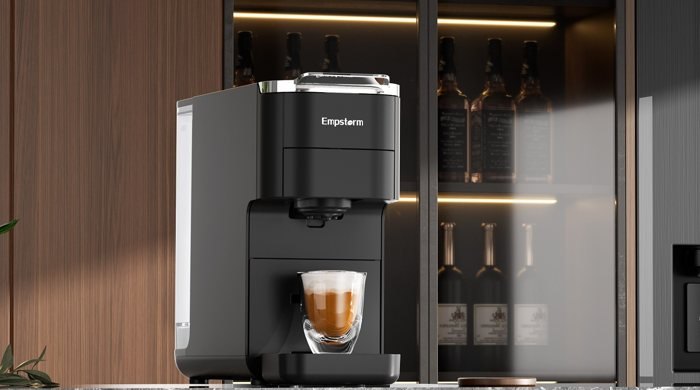
Details vary by model, but the following sequence explains how most single-serve pod and capsule machines prepare a drink.
The arrangement varies between models, but these functional parts explain the machine’s basic workflow. They also help operators describe a problem more accurately when contacting product support.
| Component or system | What it does | Practical operating consideration |
|---|---|---|
| Water tank or inlet | Stores or receives water for brewing and rinsing. | It affects refill frequency, installation planning, and water-care requirements. |
| Heating system | Prepares water for the brewing process. | It influences warm-up and the machine’s ready-to-brew workflow. |
| Pump and water path | Direct water through the machine where the design requires controlled flow or pressure. | Do not treat pressure specifications alone as a measure of drink quality or compatibility. |
| Brewing chamber | Holds the compatible pod or capsule while brewing takes place. | It must be kept clean and should close without forcing the lever or handle. |
| Outlet and drip tray | Deliver the beverage and collect drips or rinse water. | Both are user-facing hygiene points that need regular emptying and cleaning. |
| Used-format container | Collects ejected capsules or supports disposal of the used pod. | Capacity, accessibility, and the disposal process matter in self-service locations. |
| Controls and indicators | Allow drink selection and communicate readiness, water level, cleaning prompts, or faults. | Users should follow displayed instructions rather than repeatedly overriding alerts. |
Compatibility is one of the most important decisions in a pod coffee programme. A machine is designed around a particular physical format and brewing path. Inserting a format that does not fit correctly can prevent the chamber from sealing, affect water flow, damage the mechanism, or create an inconsistent beverage. It can also create an avoidable support issue.
For distributors: product selection and compatible consumables should be planned as one commercial offer. A machine without a suitable, reliable coffee-format strategy can create unnecessary friction after sale.
Single-serve brewing simplifies preparation, but it does not make every cup identical in every setting. The coffee inside the compatible format, the selected drink volume, water condition, cleanliness of the outlet and chamber, cup size, and the machine’s maintenance condition all influence the result. A programmed beverage button provides a repeatable starting point; operators should still follow the model guidance for care and drink setup.
Pod systems are usually selected for convenience and a predictable user routine. They are not a direct replacement for every espresso or filter workflow. A location that needs a wide menu, high levels of barista control, or continuous peak-hour production may need a different format. Review espresso coffee machines, drip coffee makers, and coffee machine types when comparing alternatives.
A pod coffee machine can work well where individual serving convenience matters and the menu is intentionally focused. The right application depends on the expected number of drinks, the available counter space, the users’ familiarity with the system, the preferred coffee format, and the daily cleaning arrangement.
| Symptom | Safe first check | When to escalate |
|---|---|---|
| The chamber will not close | Remove the format only if it can be done normally; check that it is the supported type, undamaged, and correctly oriented. | Do not force the lever. Escalate if the mechanism will not operate normally with a correct compatible format. |
| No drink or low flow | Check the water supply, display messages, drip tray, and whether the machine requests a rinse or cleaning cycle. | Escalate if normal flow does not return after the approved routine or an error remains displayed. |
| Used capsule does not eject | Follow the machine’s normal opening procedure and check whether the used-format container is full. | Do not insert tools into the chamber or force the mechanism. Contact support if it cannot be cleared by the documented user process. |
| Water around the machine | Check whether the drip tray is full and correctly positioned. | Stop use if water comes from the machine body, a connection, or an unknown source. |
| Persistent error, power issue, heat issue, or unusual smell | Stop using the machine and refer to the product instructions. | Immediately contact the manufacturer, distributor, or qualified service provider. |
Pod coffee machines are designed to make single-serve preparation more guided by combining heated water, a compatible pre-portioned coffee format, a defined brewing chamber, and a simple serving workflow. Their value is strongest when convenience, repeatable operation, and a focused menu matter more than manual control over every preparation variable.
The right decision still depends on the application. Before choosing a model, verify the coffee format, drink requirements, expected usage, water and waste arrangements, cleaning responsibility, support availability, and long-term consumable supply. When those conditions are clear, a pod system can become a practical part of an office, hospitality, retail, or self-service coffee programme.
Empstorm supports distributors and commercial buyers looking for practical coffee equipment for their target application. Explore pod coffee machines, review the EM-K4 compact pod coffee machine, or contact our team to discuss product and market requirements.