Join us in shaping the future of espresso innovation
Share your product ideas and market needs
Participate in prototype testing and optimization
Co-develop products with stronger market competitiveness

Choosing the right espresso machine is critical for ensuring consistent quality and efficiency in your coffee operation. Whether you’re running a high-traffic café or crafting specialty drinks in a boutique hotel, the machine you select will have a direct impact on your service quality, operational costs, and customer satisfaction. In this guide, we’ll break down the key factors to consider when choosing an espresso machine that aligns with your business needs and goals.
Key Takeaways
Espresso machines are the backbone of any coffee operation, from bustling café kitchens to elite home barista setups. With a wide array of options on the market, selecting the right machine can feel overwhelming. The best choice depends on your operational needs, volume requirements, space, and budget. This guide is designed to assist you in making an informed decision, whether you’re outfitting a café or curating a home setup that rivals the best coffee shops.
Espresso machines come in a variety of configurations, each catering to different levels of skill and volume demands. There are three primary types of espresso machines to consider:
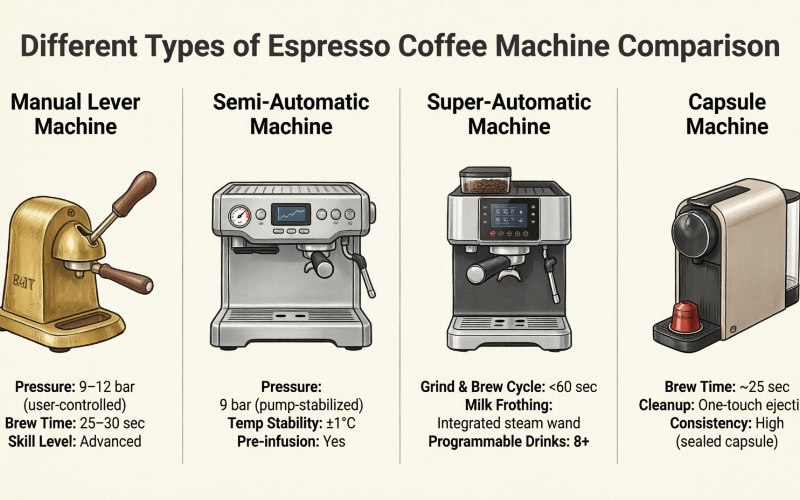
Manual machines are perfect for expert baristas who want complete control over the brewing process. These machines require the user to manually control the water flow and pressure during extraction. Although they are more labor-intensive and take longer to brew each shot, they are ideal for coffee enthusiasts and high-end establishments that want to craft the perfect espresso every time.
Semi-automatic espresso machines strike a balance between control and convenience. They automate the water flow during extraction but require the user to manually grind, tamp, and monitor the brewing process. These machines are suitable for cafes and small businesses that want quality control while maintaining efficiency.
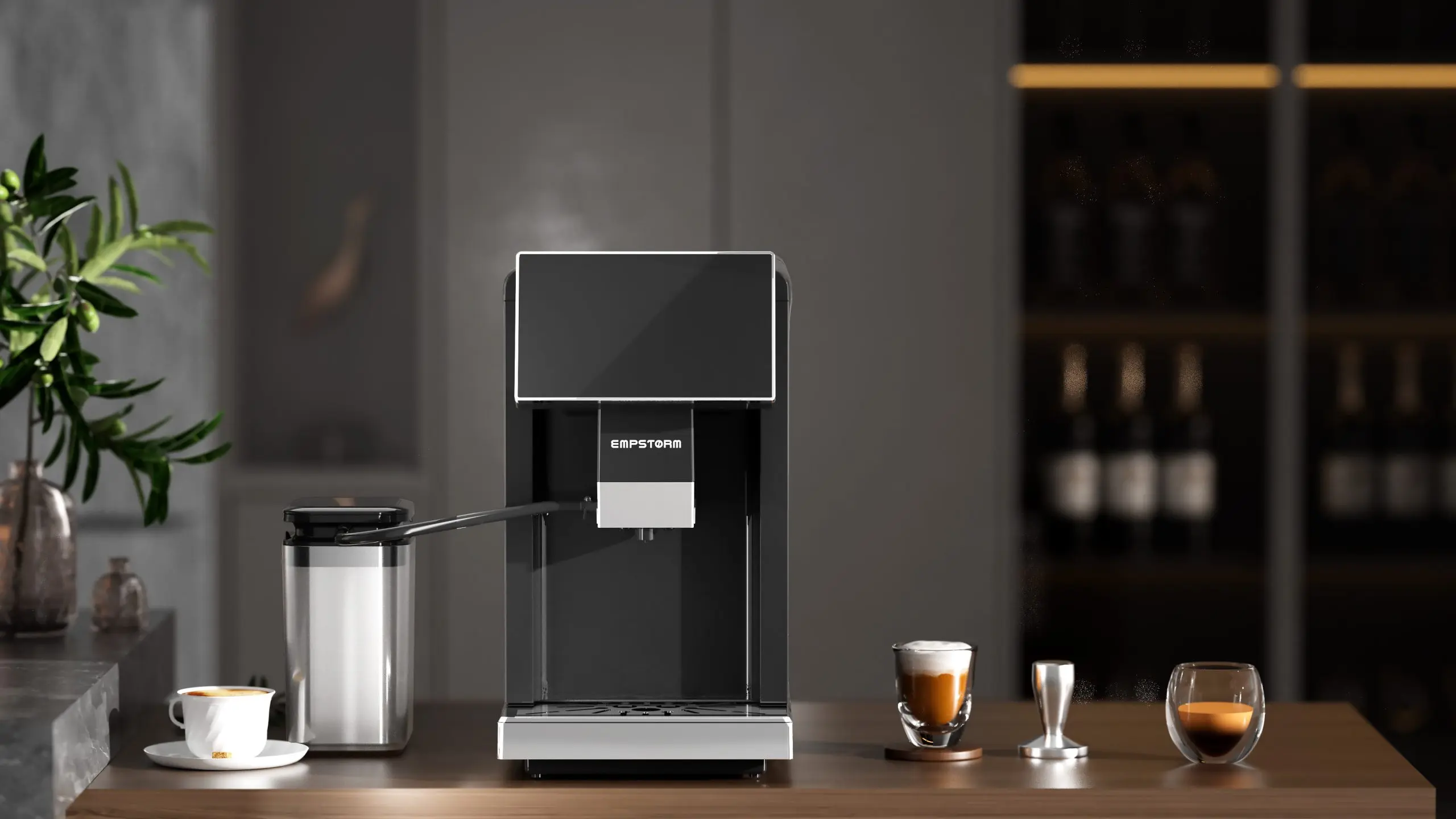
Automatic espresso machines are best for high-volume environments where speed and consistency are paramount. These machines automate every aspect of the brewing process, from grinding to extraction and steaming. They offer quick service and are ideal for busy cafes or hotels that require minimal hands-on involvement from staff.
Aside from the type of espresso machine, several critical features should be evaluated to ensure that the machine meets your needs.
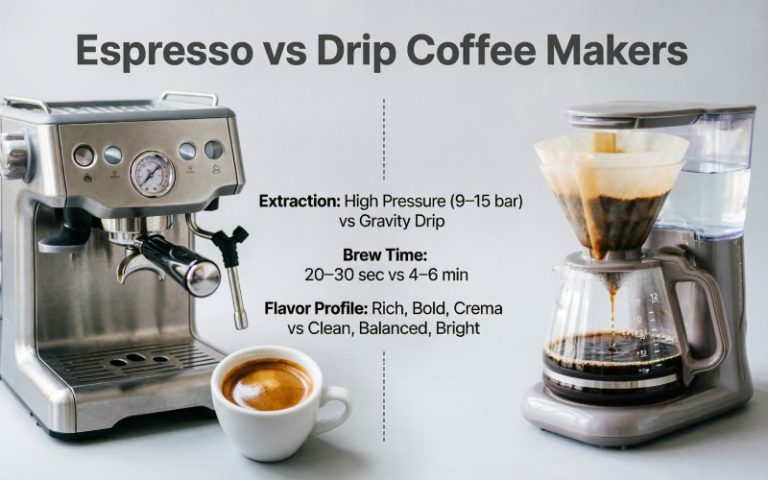
Pressure is one of the most important factors when brewing espresso. The ideal pressure for extracting espresso is typically around 9 bars. However, some machines offer adjustable pressure controls to tailor the extraction process to different coffee types. A machine with consistent pressure control will produce more consistent shots, ensuring a high-quality coffee experience for your customers.
Temperature stability is vital for producing high-quality espresso. Machines with PID (Proportional-Integral-Derivative) controllers allow for precise temperature regulation, ensuring that the water temperature remains consistent throughout the extraction process. This feature reduces the likelihood of under-extraction or over-extraction, leading to a more consistent taste profile.
For cafes and hotels that offer lattes, cappuccinos, or other milk-based drinks, steam wands are an essential feature. Look for machines that offer powerful steam wands with adjustable steam pressure for more control over texture and temperature. A professional-quality steam wand will allow your team to create smooth, velvety microfoam for premium milk drinks.
Many espresso machines do not come with integrated grinders, so it is essential to ensure that the machine is compatible with a high-quality grinder. The consistency of your coffee grind directly affects the quality of your espresso shots. Consider pairing your machine with a grinder that offers fine, adjustable settings to achieve the best results.
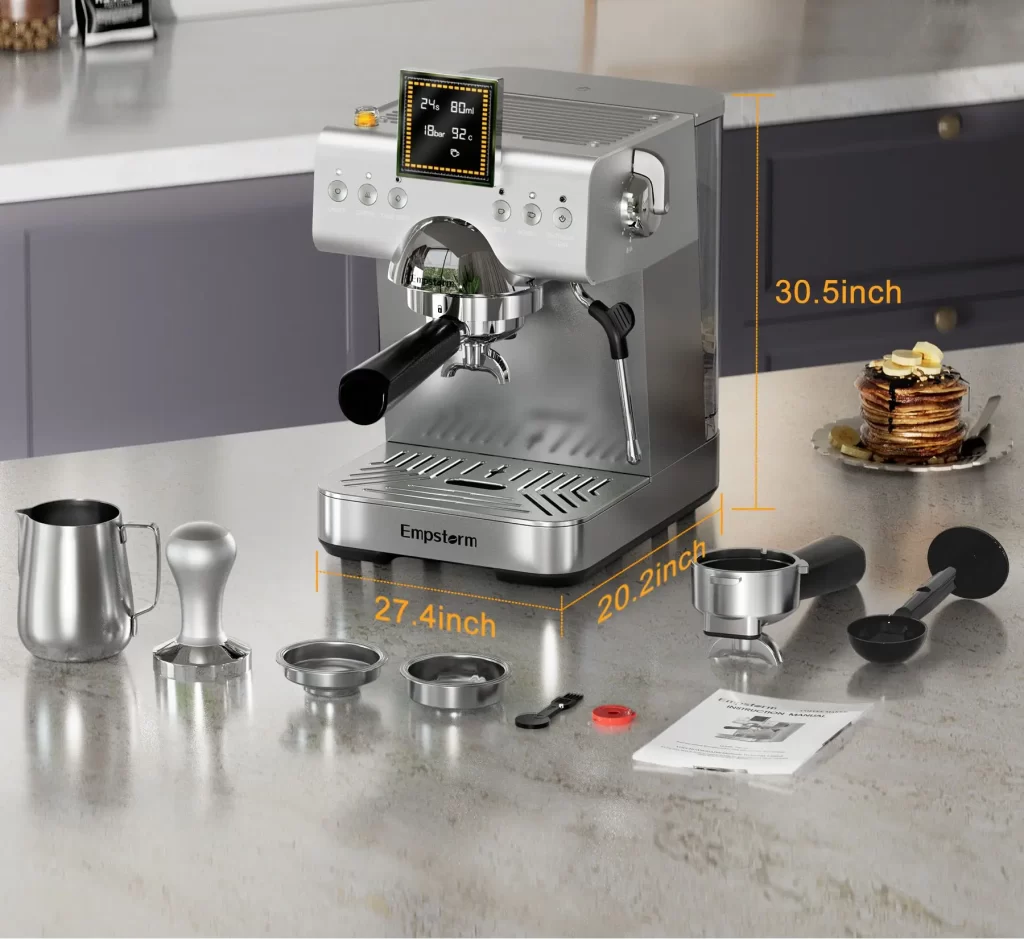
When selecting an espresso machine, it’s important to consider the volume of coffee you’ll be producing. Machines vary significantly in terms of shot capacity and boiler size, both of which influence brewing speed and overall output. Smaller machines may work well for home baristas or low-volume coffee shops, while high-volume establishments such as cafes and hotels should opt for machines with larger boilers and quicker recovery times to meet demand.
The cost of an espresso machine can range from a few hundred dollars to several thousand, depending on the machine’s features, build quality, and brand reputation. Basic machines may cost between $500 and $1,500, while higher-end semi-automatic machines can range from $2,000 to $4,000. Automatic and super-automatic machines can go up to $10,000 or more, especially when considering commercial-grade models. For cafes and high-traffic environments, investing in a higher-quality machine is critical for long-term reliability and consistency.
When purchasing an espresso machine for a café or hotel, it is essential to factor in the total cost of ownership, which includes maintenance, repairs, and electricity usage. While initial machine cost is important, the operational cost will determine your ROI over time. Machines that feature energy-saving features and quick recovery times can reduce electricity costs and improve efficiency. Regular maintenance schedules will also keep your machine running smoothly and prevent costly repairs down the line.
| Feature | Manual | Semi-Automatic | Automatic |
|---|---|---|---|
| Control | Full Control | Partial Control | Fully Automated |
| Skill Level | High | Moderate | Low |
| Speed | Slow | Moderate | Fast |
| Cost | $500–$2000 | $1500–$4000 | $3000–$10000 |
| Ideal Use | Home Baristas | Cafes & Small Businesses | High-Volume Cafes & Hotels |
Each type of espresso machine serves a different market segment, and your selection should reflect your operational needs:
Still comparing options? Our complete coffee machine buying guide explains how to choose the best coffee machine for cafés, offices and hotels.
You may also find these guides helpful: