Join us in shaping the future of espresso innovation
Share your product ideas and market needs
Participate in prototype testing and optimization
Co-develop products with stronger market competitiveness

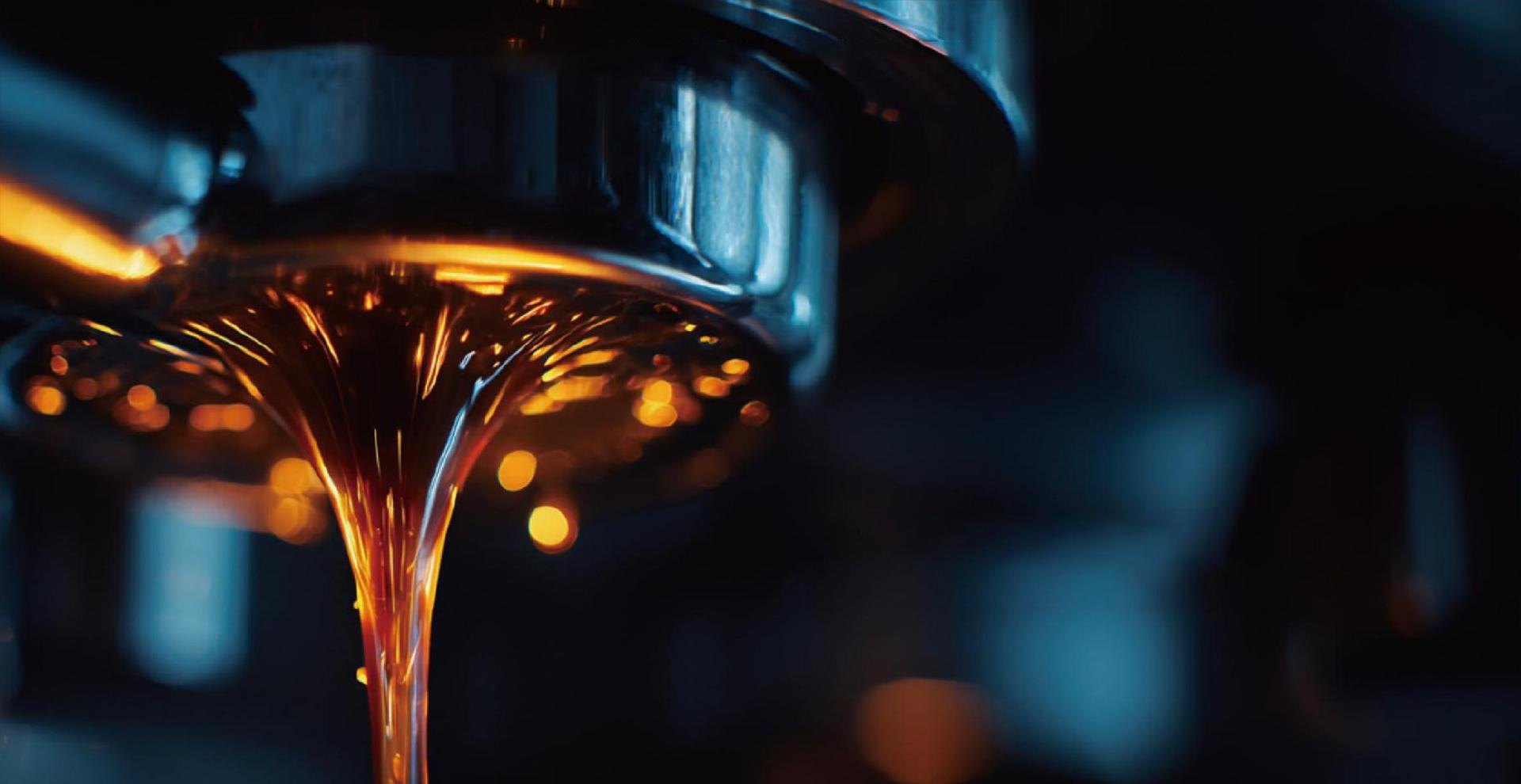
Espresso machines and capsule machines each have distinct advantages depending on the business needs. While espresso machines offer customization and quality control, capsule machines are quick, convenient, and cost-effective. Understanding the differences can guide your decision-making process for your business environment.
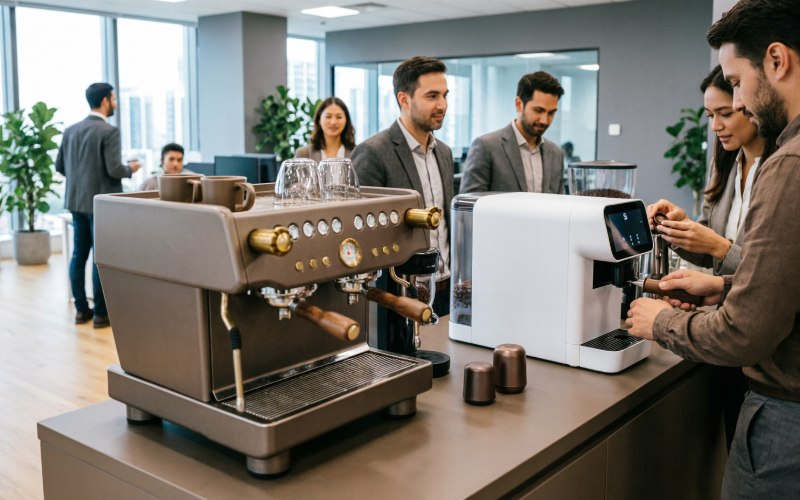
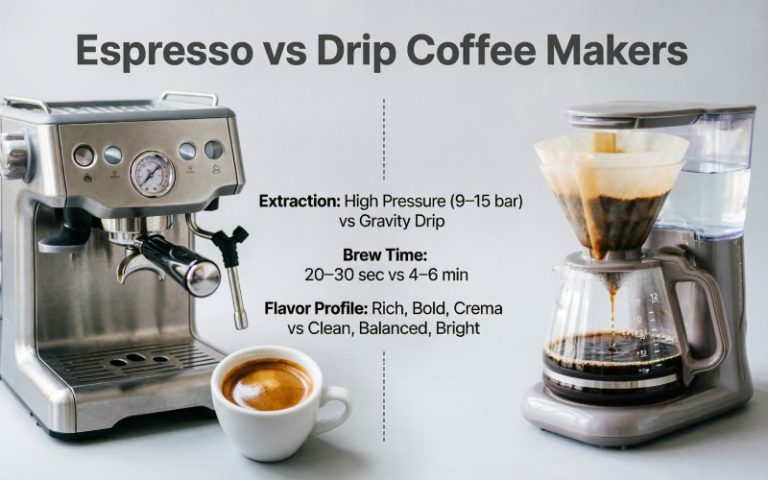
Espresso machines are the traditional choice for coffee enthusiasts and businesses prioritizing quality. These machines brew coffee by forcing hot water under pressure through finely ground coffee beans. They allow for a high degree of control, making them suitable for environments where coffee quality is paramount.
At the core of an espresso machine is a pump that generates high pressure—usually between 8 and 9 bars—to push hot water through the coffee grounds. This high-pressure brewing process extracts intense flavors, creating a rich, concentrated coffee shot. The most advanced models also incorporate features like PID (Proportional-Integral-Derivative) temperature control, which ensures precise thermal stability throughout the brewing process.
Capsule coffee machines, or pod machines, offer a quick and efficient way to brew coffee with minimal involvement. These machines use pre-packaged coffee pods that are inserted into the machine. When the machine is activated, it punctures the pod, heats the water, and brews the coffee in just a few seconds. This makes them a popular choice for offices, co-working spaces, and businesses looking for a no-fuss coffee solution.
Capsule machines work by using a high-pressure system (around 15 bars) to force water through the coffee pod. Unlike espresso machines, the coffee pod is pre-measured, ensuring consistency with every cup. The machine uses a closed-loop system, where the water is heated, pumped through the pod, and the brewed coffee is dispensed directly into the cup.
When deciding between espresso machines and capsule machines, businesses should consider factors like coffee quality, ease of use, maintenance, and cost-effectiveness.
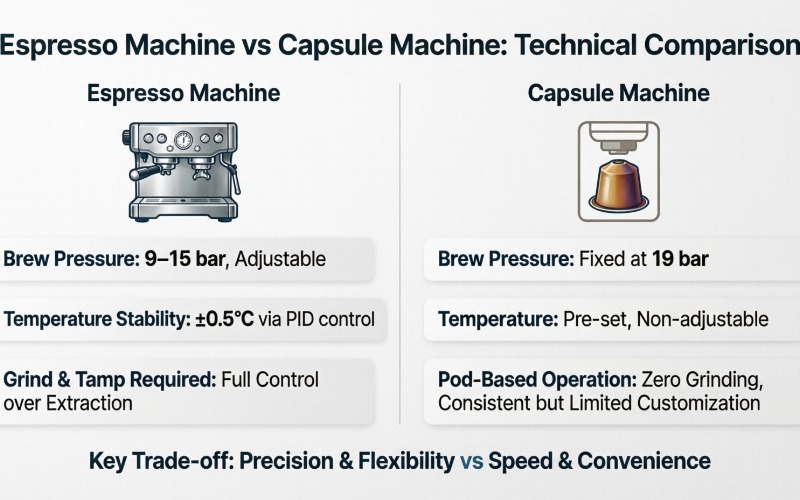
Espresso machines provide superior coffee quality due to the control over various brewing parameters, such as pressure, temperature, and grind size. With espresso machines, baristas can adjust these factors to optimize the flavor profile, resulting in a rich, customizable cup of coffee.
On the other hand, capsule machines offer a more consistent brew but sacrifice the ability to fine-tune these variables. The quality largely depends on the coffee pods used, which are pre-ground and sealed. While capsule machines can still produce a decent cup, they are unlikely to match the complexity and depth of an espresso shot.
Capsule machines excel in ease of use. With a single button press, they deliver a consistent cup of coffee with minimal training. This makes them ideal for busy offices or businesses with limited staff. No expertise is required, as the machine does all the work.
Espresso machines require more knowledge and skill, particularly when it comes to dialing in the grind size and managing extraction times. However, for businesses that want to offer a premium coffee experience, espresso machines allow for greater creativity and control.
Capsule machines are relatively low-maintenance. They require occasional cleaning, and descaling typically occurs every few months depending on water hardness. The pod system reduces the need for regular cleaning of group heads, steam wands, and other components found in traditional espresso machines.
Espresso machines, however, require more attention to detail. Regular cleaning of the group head, steam wand, and boiler is necessary. They also need periodic maintenance to replace parts like gaskets, seals, and filters, especially in high-traffic environments. Though more effort is involved, the reward is a more personalized coffee experience.
Initial investment is a major difference. Espresso machines typically cost between $1,000 and $10,000 or more, depending on the model and features. The cost of maintenance, including replacing parts and regular cleaning, can add up over time.
Capsule machines are significantly more affordable, with entry-level models starting around $100 to $500. The cost of using a capsule machine is also predictable, as the price of pods is fixed. However, the cost per cup is typically higher than espresso machines, as you are paying for the convenience and the coffee pod itself.
Espresso machines are better suited for businesses that:
Capsule machines are ideal for businesses that:
Choosing between an espresso machine and a capsule machine comes down to your business’s specific needs. Espresso machines offer more control, quality, and brand alignment for high-volume and high-quality environments, while capsule machines are cost-effective, easy to maintain, and fast for smaller businesses or low-volume settings. Ultimately, the decision depends on your budget, staff expertise, and volume expectations.
Still comparing options? Our complete coffee machine buying guide explains how to choose the best coffee machine for cafés, office and hotels.
You may also find these guides helpful: