Join us in shaping the future of espresso innovation
Share your product ideas and market needs
Participate in prototype testing and optimization
Co-develop products with stronger market competitiveness


Choosing between a capsule vs bean-to-cup machine depends entirely on workflow and extraction consistency needs. Bean-to-cup machines deliver superior ROI for high-volume cafes through fresh grinding and dual-boiler stability. Conversely, commercial capsule systems offer zero-training, low-waste precision for boutique hotels.
In the evolving landscape of commercial coffee equipment, evaluating a capsule vs bean-to-cup machine requires a deep understanding of hydraulic architecture and extraction science. As a Senior Coffee Machine Expert representing Empstorm, I have spent over 15 years engineering commercial espresso systems. Whether you are outfitting a high-traffic boutique cafe or standardizing beverage programs across a luxury hotel chain, equipment selection fundamentally dictates your operational success. This comprehensive technical guide will dissect the thermal stability, pump architectures, and return on investment (ROI) associated with both platforms. We will move beyond surface-level features and analyze the exact engineering metrics that determine cup quality and machine longevity in grueling commercial environments.
To truly understand the operational differences between these two systems, we must analyze their internal hydraulic and mechanical pathways. A commercial coffee machine is not simply a hot water dispenser; it is a highly pressurized extraction laboratory. The fundamental difference lies in how the raw material is processed immediately prior to brewing.
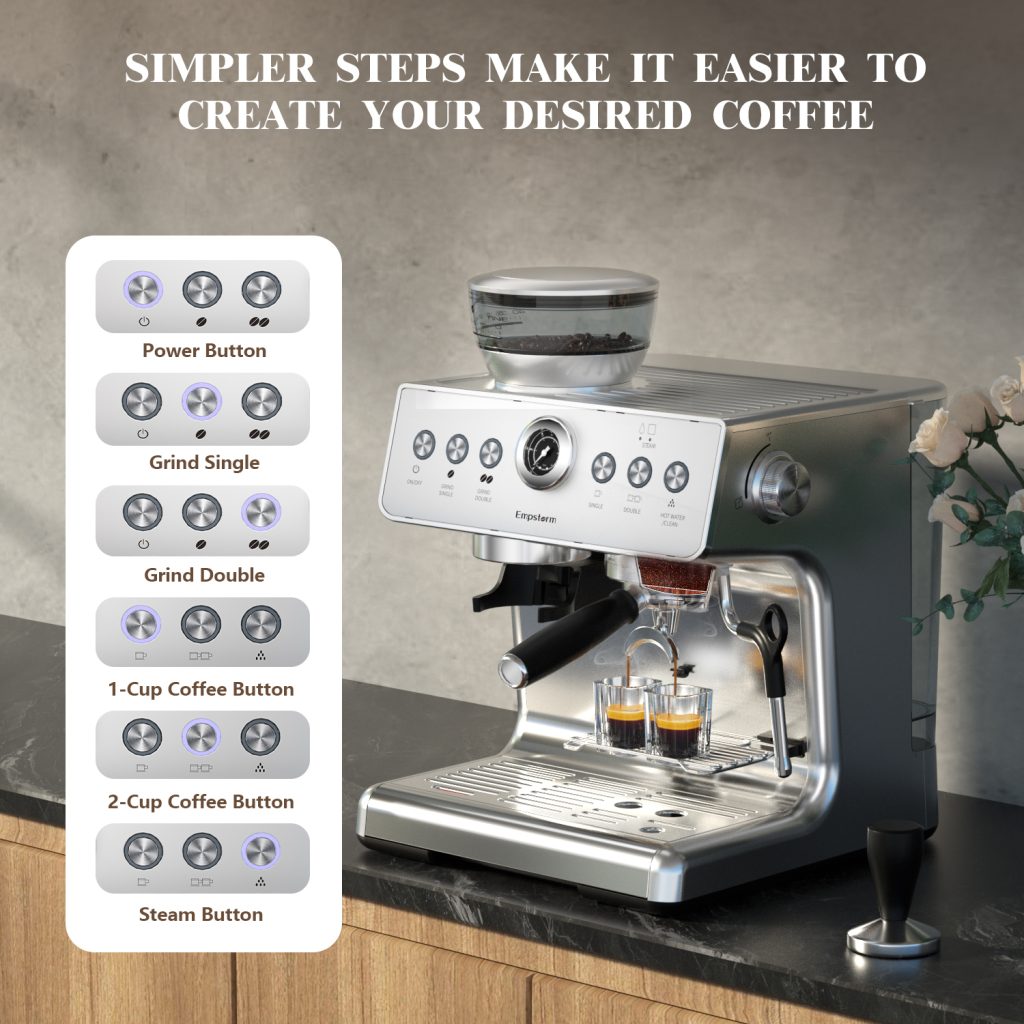
In a bean-to-cup architecture, the machine manages the entire lifecycle of the bean. This involves an internal grinder, typically utilizing flat ceramic or hardened steel burrs, which precisely fractures the roasted coffee beans into a specific micron range. The ground coffee is then mechanically dosed into a brew chamber, tamped automatically to a specific pressure, and subjected to highly pressurized water. This process demands extreme mechanical resilience. The internal components must withstand the friction of grinding, the force of tamping, and the corrosive nature of coffee oils over thousands of cycles.
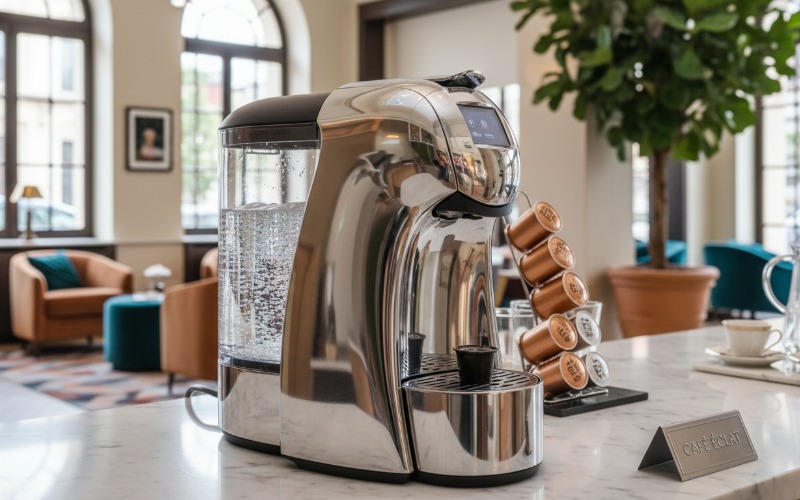
Conversely, commercial capsule systems operate on a closed-loop pre-dosed paradigm. The coffee is ground, dosed, tamped, and hermetically sealed into an oxygen-free environment at a roasting facility. The machine’s sole responsibility is puncturing the capsule and delivering water at precise pressure and temperature. Because the grinding and dosing mechanisms are removed from the machine entirely, the internal architecture is vastly simplified. This translates to smaller footprints and significantly fewer mechanical failure points, which is why they are heavily favored in environments without dedicated baristas.
| Comparison Dimension | Commercial Capsule Systems | Commercial Bean-to-Cup Systems | Empstorm Engineering Insight |
|---|---|---|---|
| Pump Type | Primarily Vibration Pumps | Primarily Rotary Vane Pumps | Rotary pumps offer whisper-quiet operation and immediate pressure ramp-up, crucial for volumetric consistency. |
| Boiler Architecture | Single Thermoblock / Thermocoil | Dual Boiler or Multi-Boiler | Dual boilers separate brewing and steaming water, preventing aggressive temperature fluctuations during high demand. |
| Thermal PID Stability | Basic NTC Thermistor | Multi-point PID Control | PID algorithms anticipate heat loss proactively, holding extraction temperatures within a 0.5-degree Celsius variance. |
| Extraction Pressure | 15 to 19 Bar (Static) | 9 Bar (Profiled / Variable) | Higher pressure in capsules overcomes the restrictive filter paper. Bean-to-cup systems mimic true espresso at exactly 9 bar. |
| Daily Cup Capacity | 50 – 150 Cups | 200 – 500+ Cups | High-volume cafes absolutely require heavy-duty bean-to-cup systems to prevent thermal exhaustion and pump failure. |
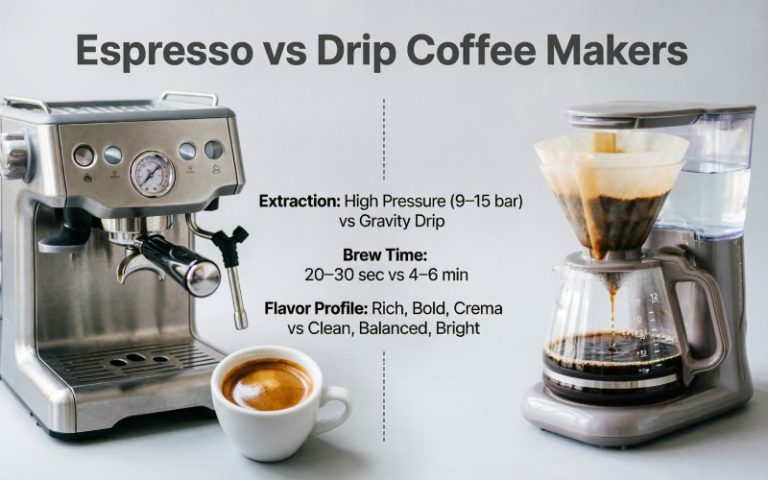
Extraction science dictates that optimal espresso is achieved when water between 90 to 94 degrees Celsius is pushed through a compacted puck of coffee at exactly 9 bars of atmospheric pressure. Any deviation in these parameters results in severe flavor defects. If the water is too cold, the extraction is sour and under-developed. If the water is too hot, the extraction becomes aggressively bitter and ashy. This brings us to the critical engineering component: the PID (Proportional-Integral-Derivative) controller.
Many standard capsule coffee machines utilize mechanical thermostats or basic NTC thermistors. These systems are reactive. They wait until the water temperature drops below a specific threshold before activating the heating element. During a busy service period, this creates a sawtooth temperature wave, meaning consecutive shots will extract at different temperatures. Advanced bean-to-cup systems, particularly those engineered for commercial espresso applications, utilize sophisticated PID algorithms. These microprocessors calculate the rate of heat loss and pulse energy to the heating elements hundreds of times per second, ensuring absolute flat-line thermal stability.
Let me share a specific field scenario that illustrates this point perfectly. During a high-volume morning rush in a London busy-district boutique hotel, we observed that their legacy machines—which lacked saturated group heads—lost exactly 3 degrees Celsius of stability every 5 minutes. The high staff turnover meant nobody noticed the sour extractions. We replaced their setup with an advanced commercial unit featuring independent brew boilers and dedicated PID loops. Within one week, customer complaints dropped to zero. We eliminated the thermal drift entirely. This is why we are so uncompromising regarding temperature control.
In our latest Empstorm commercial design, we integrated a specialized pre-infusion chamber that mitigates channeling, a very common failure point in high-pressure brewing. By introducing water at a gentle 2 bars of pressure for three seconds before ramping up to the full 9 bars, the coffee puck expands evenly. This saturates the grounds and prevents high-pressure water from finding the path of least resistance, guaranteeing a rich, syrupy extraction every single time.
The grinder is arguably the most important component in the entire coffee-making process. Commercial bean-to-cup coffee machines feature highly calibrated internal grinders. We typically utilize large flat burrs (ranging from 64mm to 83mm) to ensure a unimodal particle size distribution. This means all the coffee particles are precisely the same size, leading to an incredibly even extraction. However, fresh coffee begins oxidizing the moment it is ground. Bean-to-cup systems grind on demand, ensuring zero oxidation time between grinding and brewing. The trade-off here is maintenance. Grinders require regular cleaning to remove rancid coffee oils, and burrs must be replaced every 500 to 1000 kilograms of coffee to maintain sharpness.
Capsule systems approach the oxidation problem differently. After roasting and grinding, the coffee is immediately flushed with nitrogen to displace any oxygen before being hermetically sealed inside an aluminum or specialized plastic pod. This effectively halts the staling process, allowing capsules to remain fresh for months or even years. For low-volume environments or locations prioritizing a massive variety of single-origin offerings without managing multiple hopper systems, this technology is revolutionary. The limitation is dose size. Most capsules contain between 5 to 7 grams of coffee, whereas a traditional double espresso requires 18 to 22 grams. This is why capsule espresso often lacks the intense body and texture of a freshly ground shot.
When calculating the Total Cost of Ownership (TCO) for coffee equipment wholesalers and cafe owners, capital expenditure is only the beginning. You must factor in labor, training, consumables, and preventative maintenance. This is where the battle between capsule and bean-to-cup machines truly diverges.
Bean-to-cup machines require significant preventative maintenance. The hydraulic pathways must be chemically backflushed daily to remove hardened coffee resins. The milk texturing systems—often utilizing complex venturi valves to siphon and aerate cold milk—must be purged and sanitized meticulously to comply with health codes. Furthermore, water filtration is non-negotiable. Using hard water in a dual-boiler rotary pump machine will cause catastrophic scale buildup, leading to thousands of dollars in repairs. We strongly advise partnering with technical support teams to install robust reverse osmosis or cation exchange filtration systems.
Despite the higher maintenance overhead, bean-to-cup machines offer vastly superior profit margins on a per-cup basis. A standard shot of espresso pulled from whole beans costs pennies. By purchasing high-quality beans in bulk, a cafe can maintain an exceptionally low cost of goods sold (COGS). For a location serving 300 cups a day, the savings compared to purchasing individual capsules will pay for the machine within the first six months.
Capsule systems drastically reduce maintenance and training labor. There is no grinder to dial in every morning, no tamping technique to master, and virtually zero wasted coffee. The brewing chamber remains relatively clean, requiring only basic descaling protocols. However, you are locked into a proprietary consumable ecosystem. The per-cup cost of a commercial capsule is significantly higher than whole beans. For a boutique hotel lobby serving 30 coffees a day to guests who expect premium quality without waiting for a barista, the capsule system is an operational lifesaver. It guarantees baseline quality regardless of who pushes the button.
Modern commercial coffee demands impeccable milk texturing for lattes, cappuccinos, and flat whites. Bean-to-cup machines have revolutionized this process. Traditional espresso machines require a skilled barista to manipulate a steam wand, creating a microfoam vortex to achieve glossy, wet-paint textured milk. Advanced bean-to-cup machines automate this entirely. By utilizing integrated gear pumps and proportional valves, these machines inject precise amounts of air and steam into cold milk, delivering barista-quality microfoam at the touch of a button. This is crucial for environments that demand speed and consistency but lack highly trained specialty coffee professionals.
High-end capsule machines for commercial spaces also offer milk solutions, but they often rely on external frothing units or simplified steam injection. While adequate, they rarely achieve the tight, velvety microfoam required for intricate latte art or the demanding standards of modern coffee enthusiasts. When consulting with clients, I always emphasize that the milk system is just as important as the coffee extraction. If your primary demographic consumes milk-based beverages, the advanced texturing capabilities of a heavy-duty bean-to-cup machine are an indispensable asset.
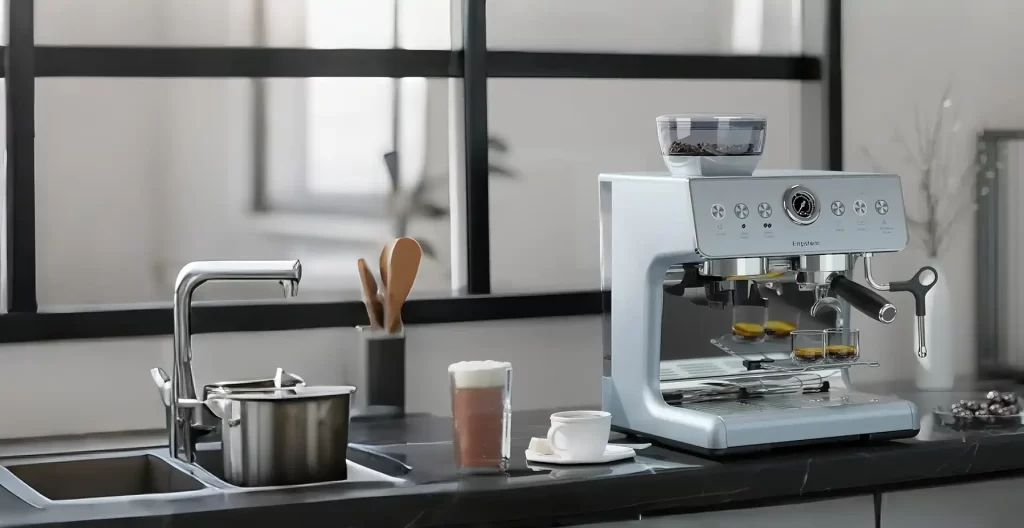
When you finally decide between a capsule vs bean-to-cup machine, you are not just buying equipment. You are defining your operational workflow, your labor requirements, and your ultimate profit margins. For high-volume cafes, restaurants, and wholesalers focused on scaling specialty coffee programs, the commercial bean-to-cup machine is the definitive choice. Its unparalleled thermal stability, fresh grinding capabilities, and incredibly low per-cup consumable cost generate massive ROI. It provides the mechanical robustness required to survive continuous use.
Conversely, for environments prioritizing simplicity, absolute consistency without training, and massive beverage variety in low-volume settings, commercial capsule systems are unmatched. They eliminate the complexities of extraction science for the end-user while delivering a highly respectable product, backed by the hermetic sealing technology that preserves the integrity of the roast. Professional organizations like the Specialty Coffee Association recognize that both systems have valid places in the market, provided they are applied to the correct operational context.
Stop guessing with your equipment investments. If you want to ensure your water chemistry, hydraulic pressures, and extraction yields are optimized for maximum profitability, you need expert guidance. Schedule my Equipment Consultation today, and let us engineer the perfect coffee architecture for your specific commercial environment.
You may also find these guides helpful: