Join us in shaping the future of espresso innovation
Share your product ideas and market needs
Participate in prototype testing and optimization
Co-develop products with stronger market competitiveness

This article is part of our Maintenance & Troubleshooting series. For a complete overview, visit our Coffee Machine Knowledge.
Reliable performance in commercial espresso equipment is rarely an accident. It is the result of rigorous engineering principles applied to preventative maintenance. For system integrators and distributors, understanding the technical depth of commercial coffee machine maintenance is not merely about hygiene. It is about preserving the hydraulic integrity, thermal stability, and Total Cost of Ownership (TCO) of high-value assets.
A proactive maintenance strategy mitigates the risk of catastrophic component failure. Scale accumulation in a boiler or a seized solenoid valve can halt operations instantly. This guide outlines the engineering protocols required to keep multi-boiler systems and heat exchangers operating at peak efficiency.
The hydraulic system is the circulatory system of any commercial espresso machine. Maintaining consistent pressure profiles requires vigilance regarding the rotary vane pump and the associated flow path components. A failure here results in inconsistent extraction yield and poor crema stability.
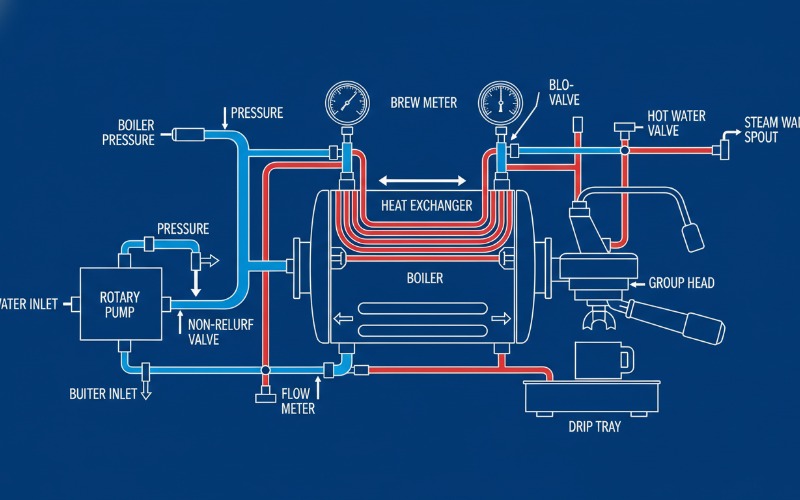
The 3-way solenoid valve is critical for relieving group head pressure post-extraction. Over time, coffee oils and fine particulate matter can seize the plunger or degrade the Viton seals. A malfunctioning solenoid leads to wet pucks and pressure leakage. Regular backflushing with specialized detergent is mandatory to solubilize these lipids before they carbonize. Technicians should inspect the exhaust fitting for obstruction during quarterly service intervals.
Volumetric dosing relies on the precision of the flow meter impellers. Scale buildup inside the impeller chamber changes the geometry of the device, leading to inaccurate water delivery. Even a minor deviation impacts the brew ratio. Integrators must ensure that filtration systems effectively reduce hardness to prevent scale formation on these sensitive components.
Thermal stability is achieved through PID control and boiler mass. However, the accumulation of minerals, specifically calcium carbonate and magnesium, threatens this stability. Scale acts as an insulator.
When scale coats a temperature probe, it delays the signal transmission to the PID controller. This lag causes the heating element to overshoot or undershoot the target temperature, resulting in extraction inconsistency. Periodic descaling or probe inspection ensures the feedback loop remains instantaneous.
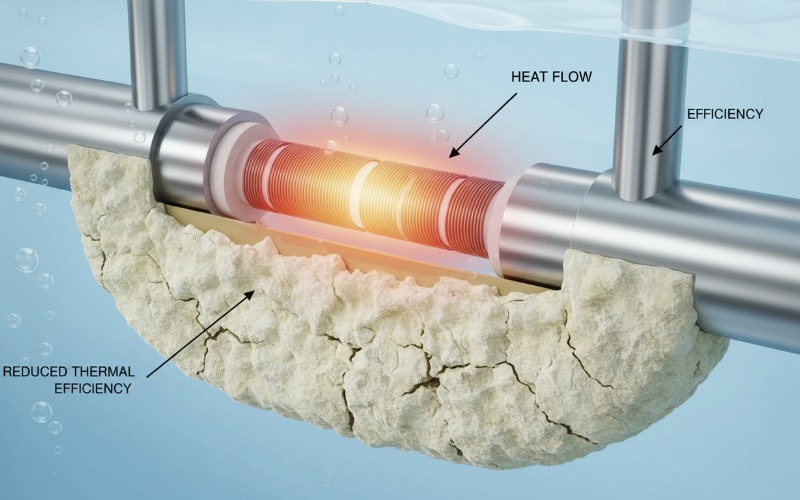
Scale buildup on the heating element itself leads to overheating. The element cannot dissipate heat efficiently into the water, causing the internal resistance wire to melt or fracture. Replacing a heating element is a costly repair that is largely preventable through proper water treatment strategies.
The group head is the point of contact between the machine and the coffee. It is exposed to high heat and pressure, making gasket and screen maintenance a priority for avoiding leaks and channeling.
Group gaskets harden over time due to thermal cycling. A brittle gasket fails to seal against the portafilter, causing water to bypass the coffee puck. We recommend replacing rubber gaskets every 3 to 6 months depending on volume. Silicone gaskets offer longer lifespans but still require inspection for tears or deformation.
The shower screen ensures even water distribution across the coffee bed. Clogged screens cause jetting, where high-velocity water tunnels through the puck, ruining the extraction. Screens should be removed and scrubbed daily. For optimal performance, consider upgrading to precision nanotech screens that resist oil adhesion.
No discussion on commercial espresso machines is complete without addressing water quality. Water constitutes 98% of the beverage and is the primary vector for machine damage.
Total Dissolved Solids (TDS) and pH levels must be balanced. Water that is too soft can be corrosive to copper boilers, while water that is too hard causes rapid scaling. Reverse Osmosis (RO) systems with remineralization cartridges are often the gold standard for protecting equipment investment. Regular testing of the water output is necessary to confirm the filtration system is operating within spec.
Adhering to a strict schedule prevents downtime. The following table outlines the standard maintenance intervals for a high-volume commercial environment.
| Frequency | Component | Action Required | Technical Note |
|---|---|---|---|
| Daily | Group Head | Backflush with detergent | Clears solenoid valve and exhaust path |
| Daily | Steam Wand | Purge and wipe | Prevents milk protein buildup in valve |
| Weekly | Drain Hose | Flush with hot water | Prevents grounds accumulation and backing up |
| Quarterly | Group Gaskets | Inspect and Replace | Check for pliability and seal integrity |
| Quarterly | Water Filter | Test Hardness/TDS | Verify filtration efficacy |
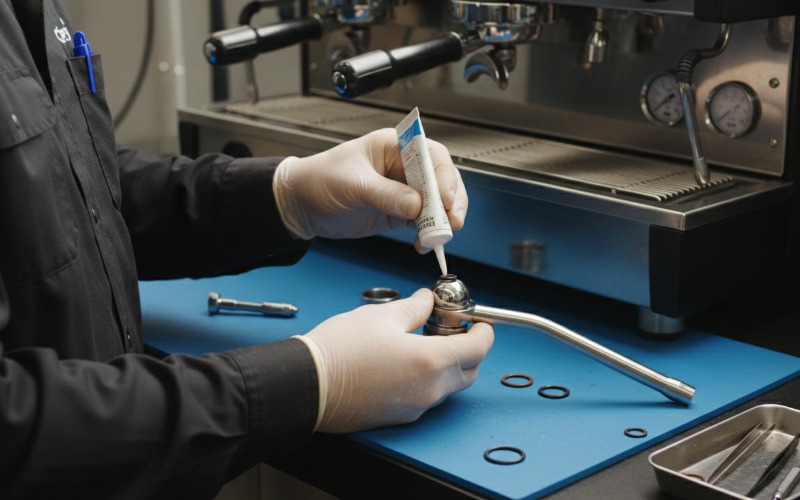
| Bi-Annually | Steam Valve | Rebuild/Lubricate | Replace O-rings and apply food-safe grease |
| Annually | Safety Valve | Inspect/Replace | Critical for boiler pressure safety compliance |
| Annually | Expansion Valve | Calibrate | Ensure opening pressure is set to 12 bar |
The steam system operates under significant pressure. Leaking steam valves not only waste energy but also cause condensation buildup inside the machine chassis, threatening electronic components.
The anti-suction valve (vacuum breaker) prevents milk from being siphoned into the boiler when the boiler cools down and depressurizes. If this valve fails, milk enters the boiler, causing bacterial growth and severe contamination. This valve should be audited during every service visit. If signs of sputtering or sticking occur, immediate replacement is necessary.
While the focus is often on the espresso machine, coffee grinders require equal attention. Dull burrs generate excessive heat and fines, leading to extraction problems that technicians might incorrectly attribute to the machine’s pump pressure.
Regular burr replacement based on throughput (e.g., every 500kg for steel burrs) ensures the particle distribution remains consistent. Integrating grinder maintenance into the machine service contract provides a holistic approach to coffee excellence.
System integrators often face diagnostic challenges. Understanding the symptoms of component failure expedites the repair process.
If the pump pressure fluctuates during extraction, check the water supply line pressure first. If the supply is stable, the issue likely lies with the pump head bypass valve or a cavitating pump due to a restricted filter. Do not adjust the pump pressure until the inlet flow is verified.
Low steam pressure usually indicates a scale issue on the water level probe. If the probe scales up, it may sense water when there is none, or fail to trigger the fill solenoid, but in the context of pressure, it often relates to the pressurestat or PID setting. However, a scaled heating element will also struggle to recover pressure quickly after use.
Technical maintenance must be integrated into the daily workflow of the venue. Baristas are the first line of defense. Training staff to recognize the sound of a struggling pump or the drip of a worn gasket empowers them to alert technicians before a breakdown occurs. Providing a logbook for staff to record pressure readings and anomalies creates a data history that is invaluable for troubleshooting.
Descaling frequency depends on water hardness and volume. With proper water filtration (RO or cartridge), a full boiler descale should only be needed every 1-2 years by a professional. Without filtration, scaling can occur in months. Preventative filtration is superior to reactive descaling.