Join us in shaping the future of espresso innovation
Share your product ideas and market needs
Participate in prototype testing and optimization
Co-develop products with stronger market competitiveness


This article is part of our Coffee Maker Types guide. For a complete overview, visit our Coffee Machine Knowledge series.
As a 15-year veteran in the coffee machine industry and the founder of Empstorm, I’ve seen thousands of coffee lovers struggle with the same question: Should I prioritize the convenience of a capsule machine or the craftsmanship of a traditional espresso setup? In 2026, the gap between these two technologies has widened in terms of both flavor complexity and long-term sustainability. This in-depth analysis will dissect the mechanics, economics, and sensory outcomes of both systems to ensure your kitchen setup matches your lifestyle.
The Capsule Coffee Maker is the ultimate tool for efficiency, delivering a consistent cup in under 40 seconds with zero manual skill. Conversely, a Traditional Espresso Machine is an investment in flavor; it offers superior thermal stability, the ability to use fresh-ground specialty beans, and professional microfoam for latte art. For most households drinking more than two cups a day, a traditional machine pays for itself within 18 months through significantly lower bean costs.
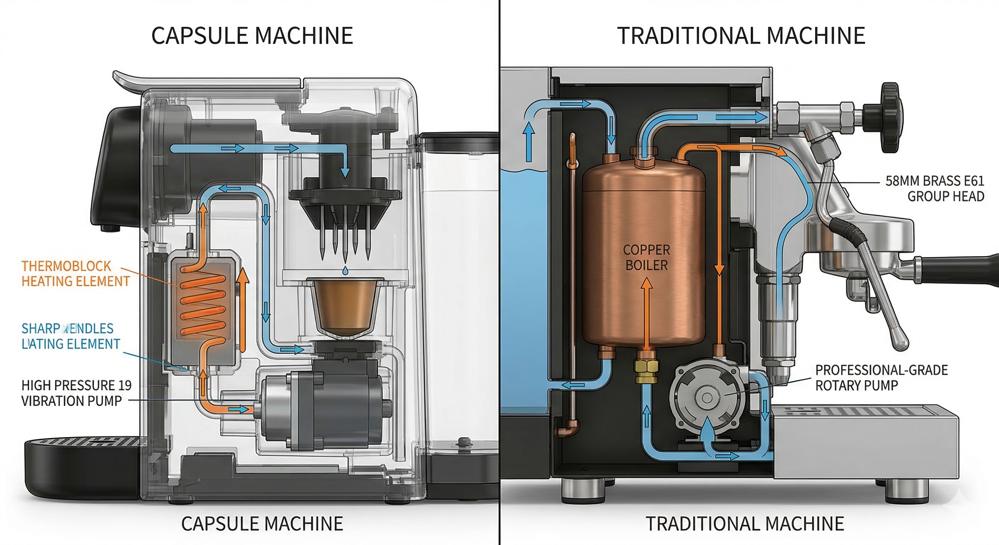
To truly understand the difference in your cup, we must look under the hood. Coffee extraction is not just about hot water hitting beans; it’s a high-pressure chemical reaction that emulsifies oils into the characteristic “crema” we crave. Traditional machines and capsule systems approach this physics problem from two opposite ends of the spectrum.
Most capsule coffee machines rely on a Thermoblock. Think of this as a flash-heating coil. Water travels through a narrow, heated labyrinth, reaching brewing temperature in seconds. While this is a marvel of modern engineering for speed, it lacks “thermal mass.” This means as the water flows, the temperature can fluctuate by several degrees, often leading to a “hollow” or overly acidic taste. Furthermore, because pods are pre-sealed, the machine must use a high-vibration pump (often marketed as 19-bar) to force water through a very small surface area, which can sometimes result in over-extraction and bitterness.
Traditional semi-automatic machines, such as the prosumer models we recommend at Empstorm, use heavy brass or stainless steel boilers. These boilers act as a thermal reservoir, ensuring that the water hitting your coffee puck is exactly 93°C from the first drop to the last. Most importantly, these machines utilize an Over-Pressure Valve (OPV) to regulate the pump to a steady 9-bar. This is the industry “golden rule” for espresso. It allows the water to saturate the grounds evenly, dissolving the complex sugars and fats that give espresso its syrupy body and lingering finish.
The standard 58mm portafilter in a traditional machine allows for a wide, shallow coffee puck. This geometry is crucial for preventing “channeling”—where water blasts a hole through the coffee rather than flowing through it. Capsule pods are narrow and deep, which limits the contact time and surface area. When you use a traditional machine, the larger puck allows for a more complex “tiger-striped” crema that contains the true aromatic essence of the bean.
| Feature | Capsule Coffee Maker | Traditional Espresso Machine |
|---|---|---|
| Heating Tech | Thermoblock (Fast/Fluctuate) | Boiler/PID (Stable/Precise) |
| Brew Pressure | 15-19 Bar (Unregulated) | 9 Bar (Industry Standard) |
| Control Level | Automatic (Stop/Start) | Full Manual Control |
| Cost Per Cup | $0.75 – $1.25 | $0.30 – $0.55 |
| Milk Quality | Dry/Aerate Foam | Silky Microfoam (Latte Art) |
| Durability | 2-4 Years (Plastic Parts) | 10+ Years (Serviceable) |
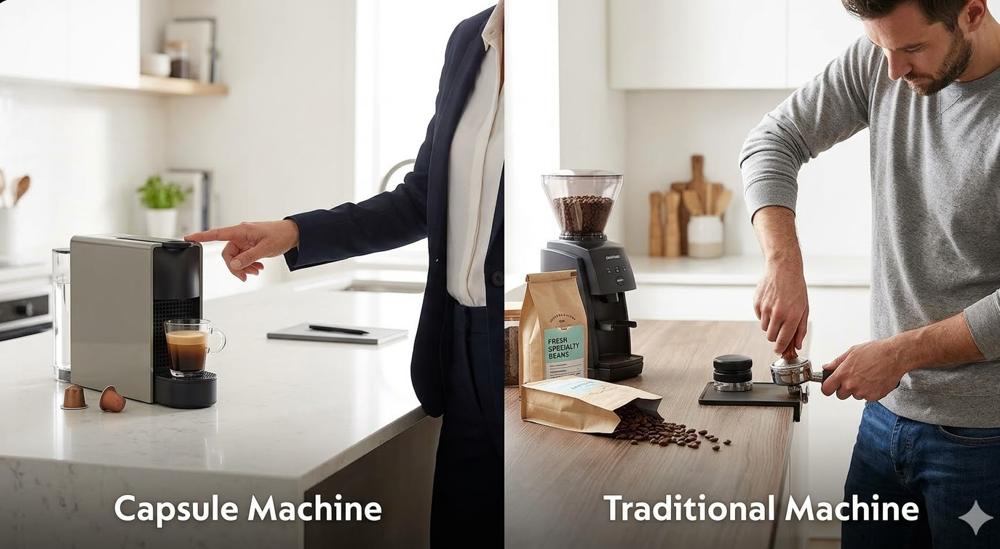
Efficiency isn’t just about the brew time; it’s about the entire workflow from the moment you wake up to the moment you leave for work. This is where the two machines divide the market based on lifestyle and personality types.
The capsule workflow is the pinnacle of frictionless design. You drop a pod in, press a button, and walk away. There is no mess to wipe up and no beans to weigh. For the “morning rusher” or the office professional who views coffee primarily as a high-quality fuel, this 40-second cycle is unbeatable. The consistency is 100%; the cup you drink on Monday will taste exactly like the cup you drink on Friday.
Traditional brewing is a mindful ritual. It requires you to grind fresh beans—ideally with a high-quality burr grinder—weigh the dose (usually 18-20 grams), and apply a level tamp. This process takes 3 to 5 minutes. While this sounds like a drawback, it allows you to “dial in” your coffee. You can make it stronger, sweeter, or brighter depending on the bean’s origin. It is a hobby that rewards you with a superior sensory experience that a factory-sealed pod can never match.
At Empstorm, we always tell our clients to look beyond the initial price tag. The “razor and blade” business model is very much alive in the coffee world.
A decent capsule machine might only cost you $150. A traditional setup, including a grinder, usually starts around $500. However, the Cost Per Cup (CPC) of a capsule is roughly $0.90, whereas premium specialty beans for a traditional machine cost about $0.40 per shot. If you drink two cups a day, you save $365 a year with a traditional machine. In just over a year, the “expensive” machine has already paid for itself.
Most capsule coffee machines are built with plastic internal components that are snapped together, making them nearly impossible to repair. When the pump dies, the machine is usually discarded. Traditional espresso machines are built for longevity. At Empstorm, we stock machines with standardized parts—gaskets, solenoids, and heating elements—that can be easily replaced, ensuring your machine stays on your counter and out of the landfill for a decade or more.
Capsule coffee machines often rely on “dry foam” generators. These use a spinning whisk to aerate milk, creating large, stiff bubbles that sit on top of the coffee like a hat. It’s functional but lacks the creamy mouthfeel of a cafe latte. A traditional machine uses a high-pressure steam wand to create a vortex, incorporating air at a microscopic level to create Microfoam. This “liquid silk” is essential for latte art and provides a natural sweetness to the milk as the lactose is heated precisely.
At Empstorm, we don’t just compare specs; we test machines in real-world kitchens. We believe the best machine is the one you will actually use every morning. Choosing between a capsule and a traditional machine is a choice between convenience and craft. Whether you need the surgical efficiency of a pod or the artisanal ritual of a portafilter, we are here to help you brew better.
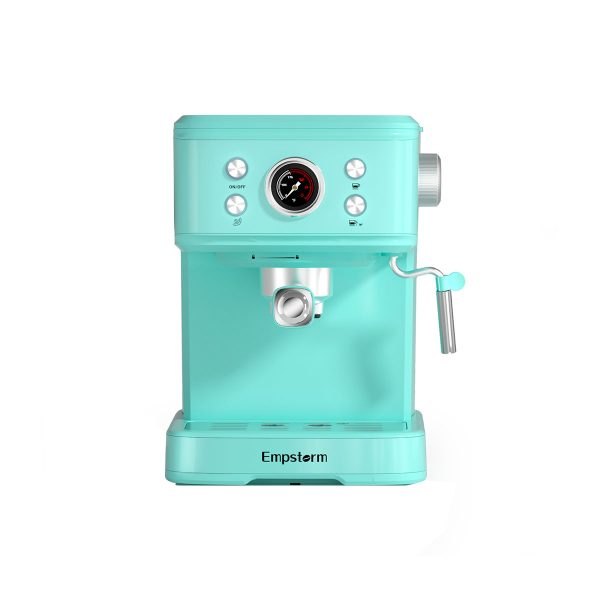
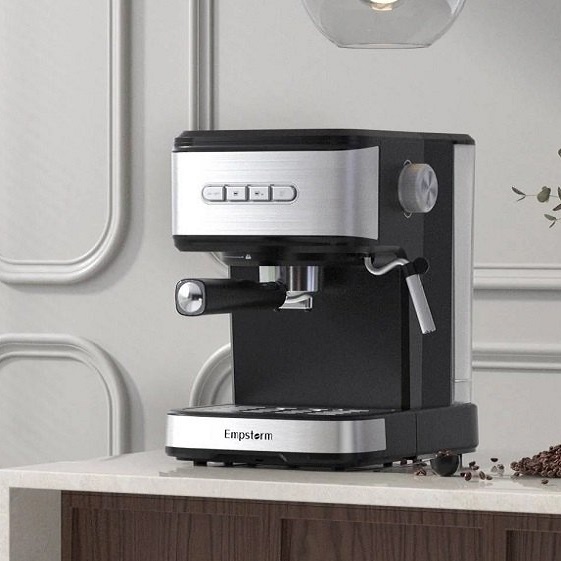
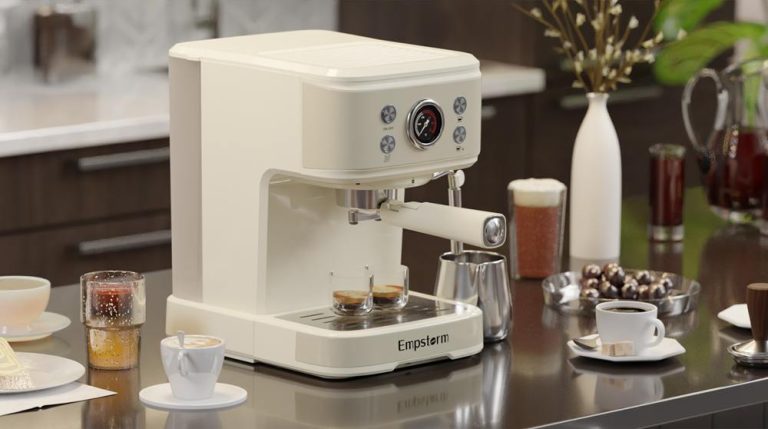
Introducing the Empstorm EM-04E 3-in-1 Coffee Maker: The Hybrid Solution for the Modern Home.
Still torn between the convenience of capsules and the professional quality of a semi-automatic machine? The Empstorm EM-04E completely bridges the gap. As an innovative 3-in-1 brewer, it is perfectly compatible with Nespresso Capsules, E.S.E Pod, and your favorite freshly ground coffee.