Join us in shaping the future of espresso innovation
Share your product ideas and market needs
Participate in prototype testing and optimization
Co-develop products with stronger market competitiveness

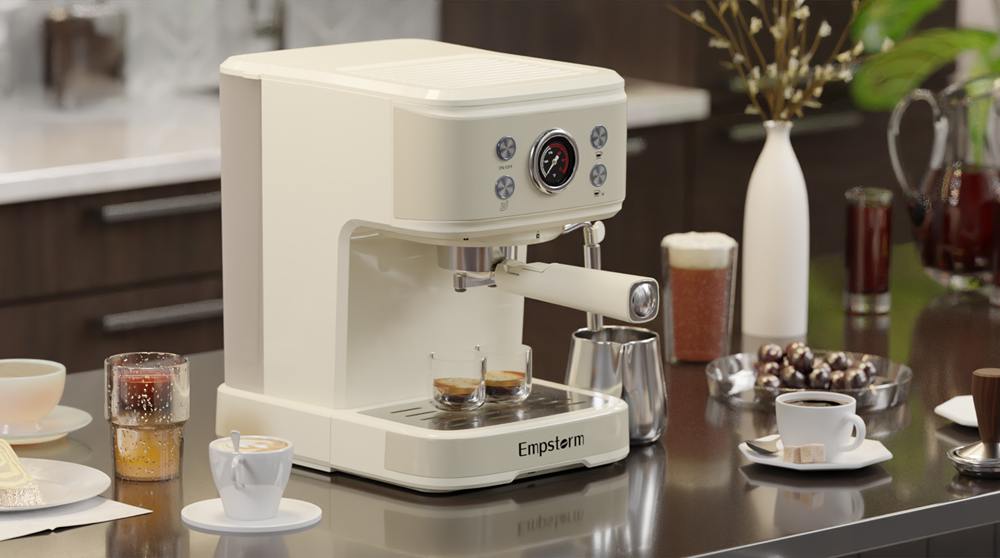
Compare semi-automatic and fully automatic espresso machines for commercial use. Analyze TCO, thermal stability, and workflow efficiency for B2B ROI.
This article is part of our Coffee Machine Knowledge series. For a complete overview, visit our Coffee Maker Types guide.
In the competitive landscape of commercial coffee distribution, selecting the correct hardware infrastructure is a calculation of engineering capability versus operational requirements. The debate between semi-automatic and fully automatic (super-automatic) espresso machines is not merely about preference but involves distinct hydraulic architectures, thermal stability mechanisms, and long-term ROI implications.
For B2B distributors and facility managers, understanding the technical divergences between these systems is critical for guiding clients toward equipment that aligns with their volume, staff competency, and target cup profile.
The semi-automatic espresso machine represents the industry standard for specialty coffee. Its architecture isolates the critical variables of extraction—pressure, temperature, and time—allowing a skilled operator to manipulate them manually. From an engineering perspective, these machines are defined by their separation of grinding and brewing processes.
Modern semi-automatic machines typically employ a Multi-Boiler or Dual-Boiler system. This configuration separates the steam boiler (for milk frothing) from the brew boiler. The primary advantage is thermal independence. The brew boiler is often controlled by a PID (Proportional-Integral-Derivative) algorithm, which monitors temperature via a probe and pulses the heating element to maintain stability within ±0.1°C.
Furthermore, high-end units feature Saturated Group Heads. In this design, the group head is directly connected to the boiler, ensuring that the water path remains thermally stable from the reservoir to the dispersion screen. This minimizes thermal loss during the idle phase, a critical factor for maintaining Extraction Yield percentages in specialty environments.
While termed “semi-automatic,” these machines utilize flow meters to measure water volume. The Volumetric Dosing allows the technician to program specific water quantities, ensuring consistent brew ratios. Advanced models introduce Variable Pressure Profiling, utilizing gear pumps to alter the pressure curve during extraction (e.g., ramping from 2 bars of pre-infusion to 9 bars of extraction). This capability allows for the manipulation of acidity and body, optimizing the flavor profile of single-origin beans.
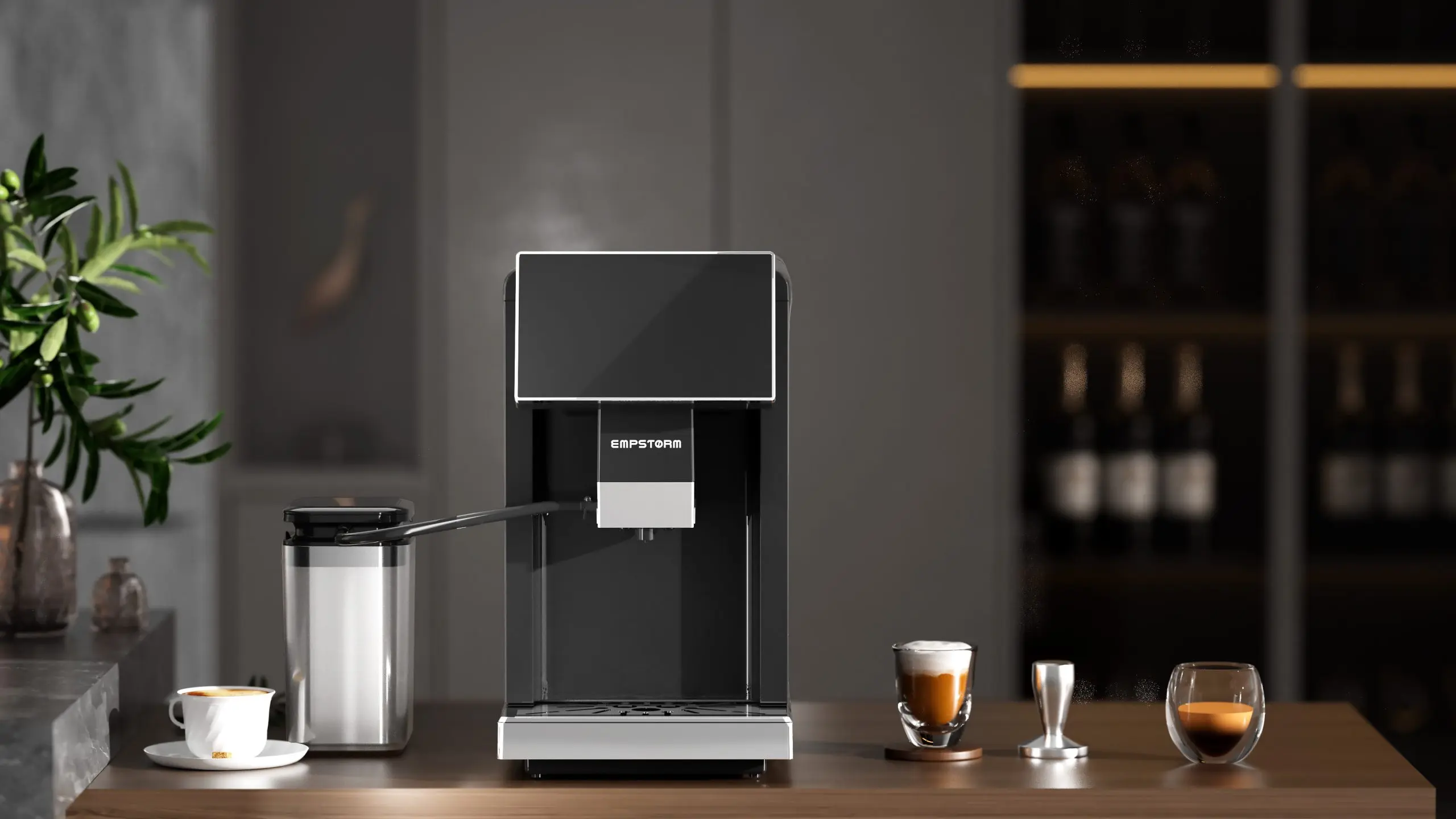
Fully automatic, or “bean-to-cup,” machines integrate grinding, tamping, brewing, and waste disposal into a single chassis. The engineering focus here shifts from operator manipulation to robotic consistency and speed.
The heart of a fully automatic machine is the Brew Unit. This mechanical assembly receives ground coffee, compresses it within a chamber using a piston (simulating tamping), and forces water through the puck. Unlike the massive brass boilers of semi-automatics, super-automatics often use Thermoblocks or flash heaters. These components heat water on demand as it passes through a narrow channel.
While thermoblocks allow for rapid startup and energy efficiency, they traditionally struggled with thermal mass compared to saturated groups. However, modern high-volume super-automatics now incorporate heavy-duty boilers and metallic brew chambers to mitigate temperature fluctuations during rush periods.
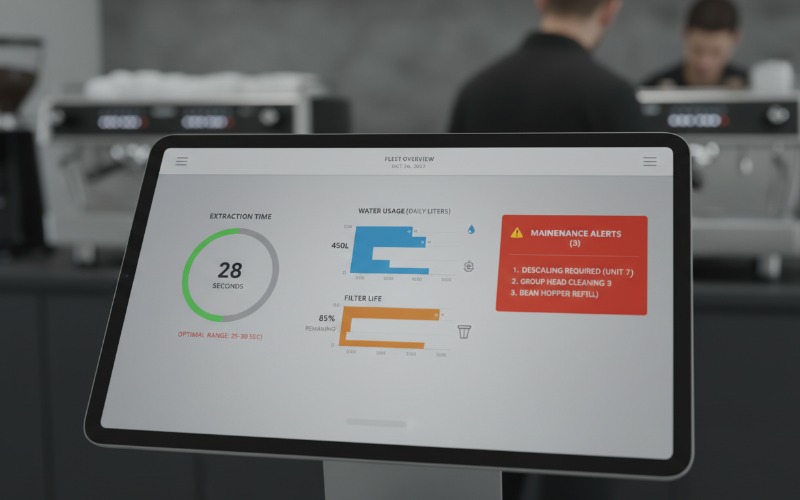
A distinct advantage of modern fully automatic systems is Telemetry. These machines are IoT-enabled devices capable of transmitting usage data, error logs, and cleaning cycles to a central server. Some models feature self-adjusting grinders (e.g., Grind-by-Wire technology) that monitor extraction time. If the shot runs too fast, the machine automatically tightens the burrs to fine-tune the grind size, maintaining target TDS without human intervention.
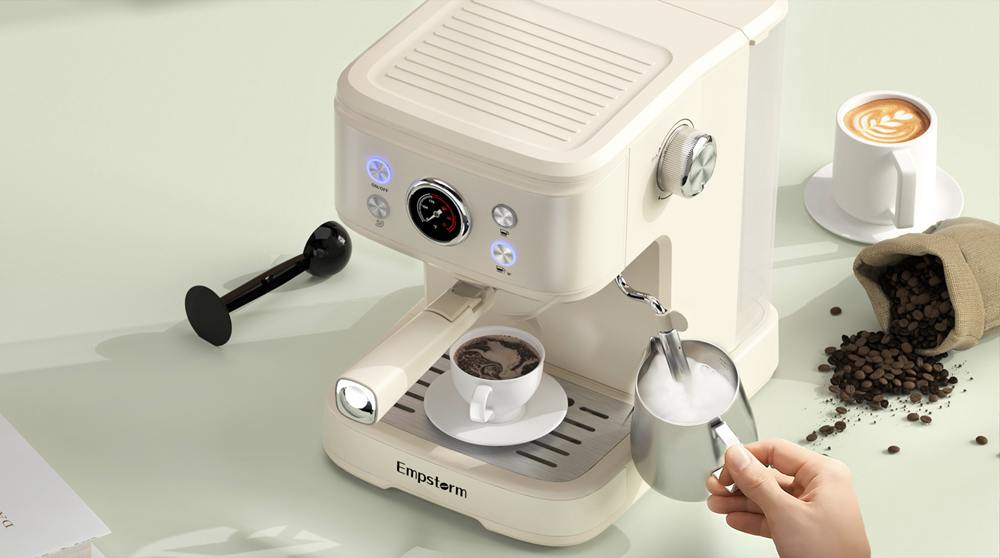
For facility managers deciding on capital expenditure, the following technical comparison breaks down the core differences in performance and infrastructure requirements.
| Feature | Semi-Automatic Systems | Fully Automatic Systems |
|---|---|---|
| Heating System | Multi-Boiler / Heat Exchanger (High Thermal Mass) | Thermoblock / Flash Boiler (Rapid Recovery) |
| Pressure Control | Rotary Pump (Constant 9 bar or Variable Profile) | Vibration Pump (Pulse) or Rotary (High End) |
| Grinding Mechanism | External Grinder (Required) | Integrated Ceramic or Steel Burrs |
| Calibration Method | Manual (Barista skills required) | Software-driven / Auto-correcting algorithms |
| Maintenance Complexity | Low (Gaskets, Screens, Descaling) | High (Moving plastic parts, O-rings, drive gears) |
| Throughput (Cups/Hour) | Depends on Operator Speed (Approx. 60-120) | Mechanically Limited (Approx. 150-250+) |
| TDS Control | Variable (Depends on dose/grind prep) | Consistent (Programmed parameters) |
When calculating ROI for B2B clients, the initial purchase price is only one component. The Total Cost of Ownership (TCO) varies significantly based on labor, maintenance, and consumables.
Semi-automatic machines demand higher operational expenditure (OPEX) regarding labor. A barista must be trained in dosing, distribution, tamping, and milk texturing. High turnover rates in the hospitality industry can make this training cost prohibitive for non-specialty venues. Conversely, fully automatic machines effectively deskill the coffee station, allowing general staff to produce consistent beverages with a single button press, significantly lowering training overhead.
From a technician’s standpoint, fully automatic machines have more points of failure. The internal transport mechanisms for the brew group, the automated milk cleaning lines, and the internal grinders involve complex mechatronics. Preventive maintenance (PM) contracts are mandatory and often more expensive annually compared to semi-automatics.
Semi-automatic machines, particularly those built on the E61 or similar chassis, are robust. With regular backflushing and gasket replacements, these machines can remain operational for 10-15 years. Super-automatics, due to plastic components and high-cycle moving parts, typically have a shorter ROI lifecycle of 5-7 years before major refurbishment is required.
Choosing between these technologies is ultimately a question of the business model.
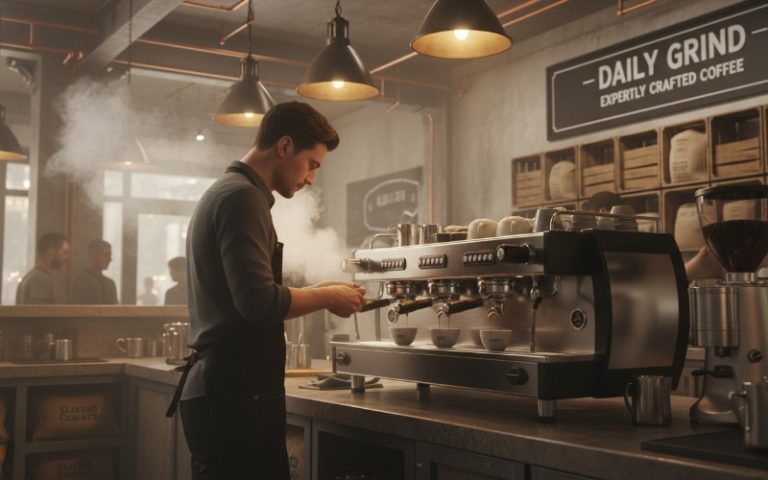
For environments where the “craft” is the selling point, semi-automatic machines are non-negotiable. The visual theatre of the portafilter, the steam wand hiss, and the barista’s interaction create the value proposition. Furthermore, the ability to dial in specific recipes for different single-origin coffees requires the open architecture of a semi-automatic system.
In Quick Service Restaurants (QSR) or hotel breakfast buffets, speed and consistency supersede craft. A fully automatic machine with a dual-hopper allows for a standard espresso roast and a decaf option to be served instantly. The integration of automatic milk frothing systems (injecting air into the milk line to create microfoam) ensures that lattes and cappuccinos are identical regardless of the shift operator.
For more insights on optimizing commercial kitchen workflows, refer to the Specialty Coffee Association standards on water quality and brewing protocols.
“Better” is subjective, but semi-automatic machines generally have a higher ceiling for quality. They allow for finer adjustments in grind and pressure profiling, which is essential for extracting nuanced flavors from high-end specialty beans. However, a poorly operated semi-automatic will produce worse coffee than a calibrated fully automatic machine.
Generally, yes. Many modern super-automatics utilize “energy-saving modes” and thermoblocks that heat only the water required for the specific beverage, whereas multi-boiler semi-automatics must keep large volumes of water at 93°C continuously. However, large saturated boiler machines are improving with insulated boilers and eco-modes.
Yes, commercial fully automatic machines feature refrigerated milk units. They use venturi pumps or air injection systems to draw fresh milk, heat it, and texture it. Rigorous daily cleaning cycles are required to prevent bacterial growth in the milk lines.
Entry-level commercial semi-automatics start around $3,000, with high-end multi-boilers reaching $25,000+. Commercial fully automatics have a higher entry point, typically starting at $8,000 and reaching upwards of $40,000 for high-capacity models with telemetry and flavor stations.